Architecture as a Product
디지털 / 전시 · 서울, 한국 · 2025
알바로 시자의 ‘소요헌’을 ‘알고리즘 프로덕트’로 변화시키는 실험.
《Pyro-politics Realism》 커미션 작업인 이 프로젝트는 거장 알바로 시자(Álvaro Siza)의 미실현작 「두 피카소를 위한 갤러리」가 25년 뒤 한국 창평에서 4분의 1 규모의 ‘소요헌’으로 지어진 사실에 주목합니다. 이를 바탕으로 건축가의 설계 원리를 알고리즘 프로덕트로 확장하며, 훌륭한 건축의 반복은 단순한 복제가 아니라 ‘탁월함의 확산’이라는 도발적인 명제를 던집니다.
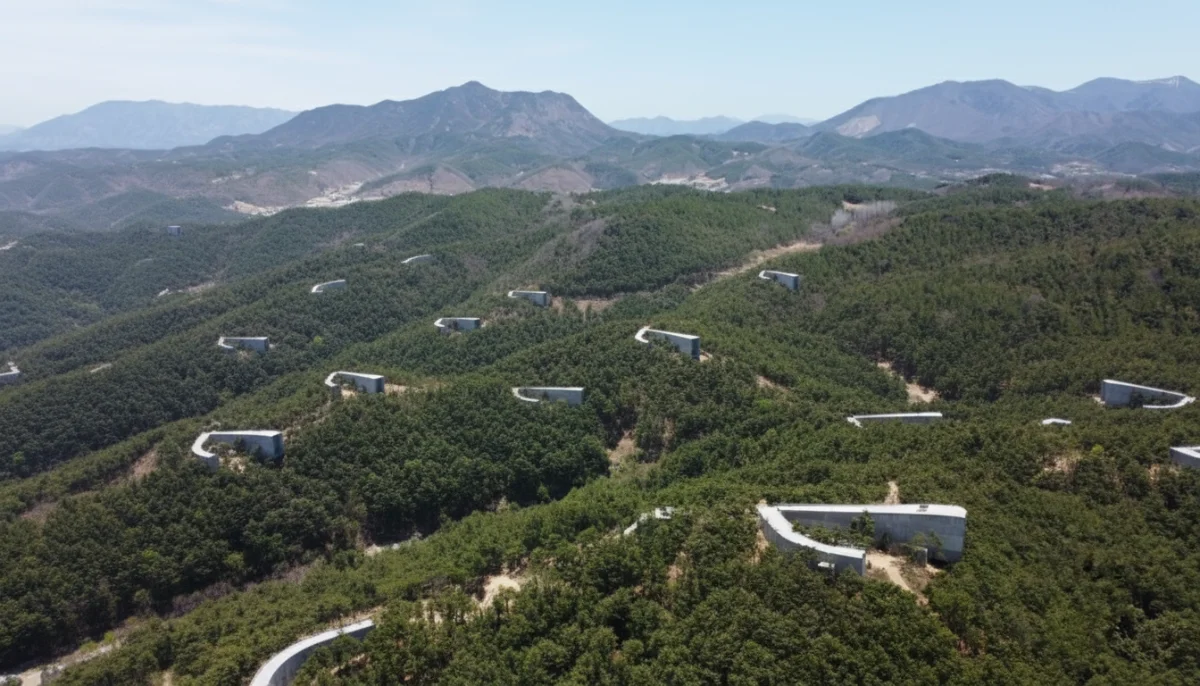
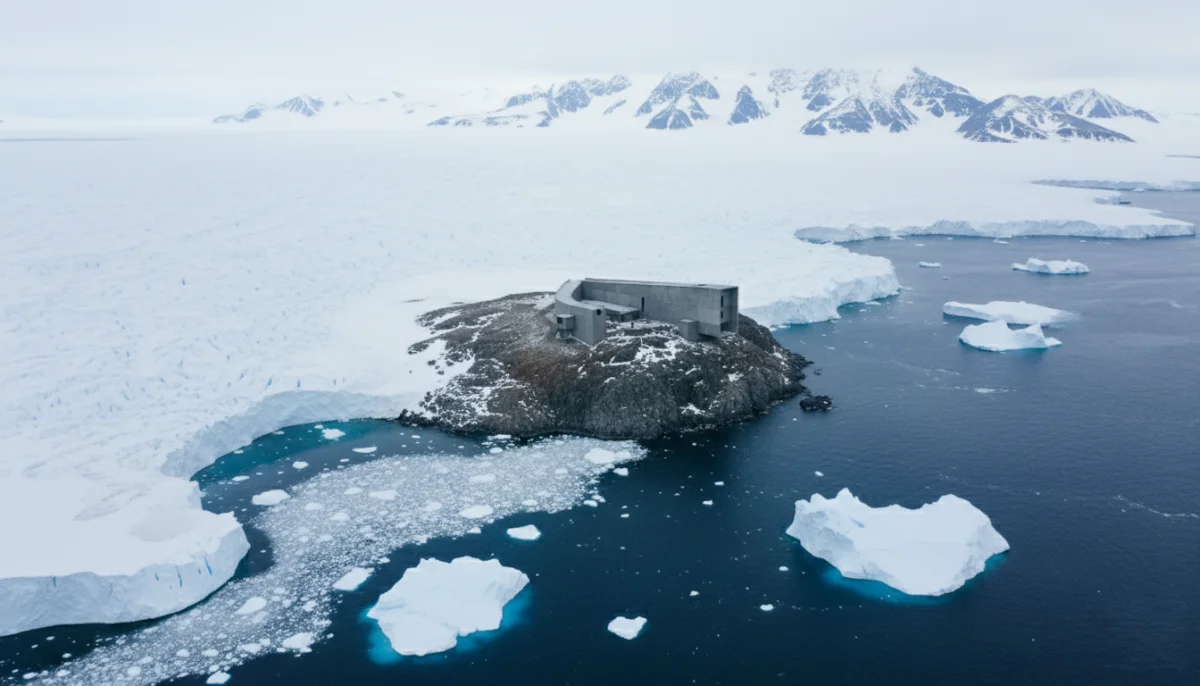
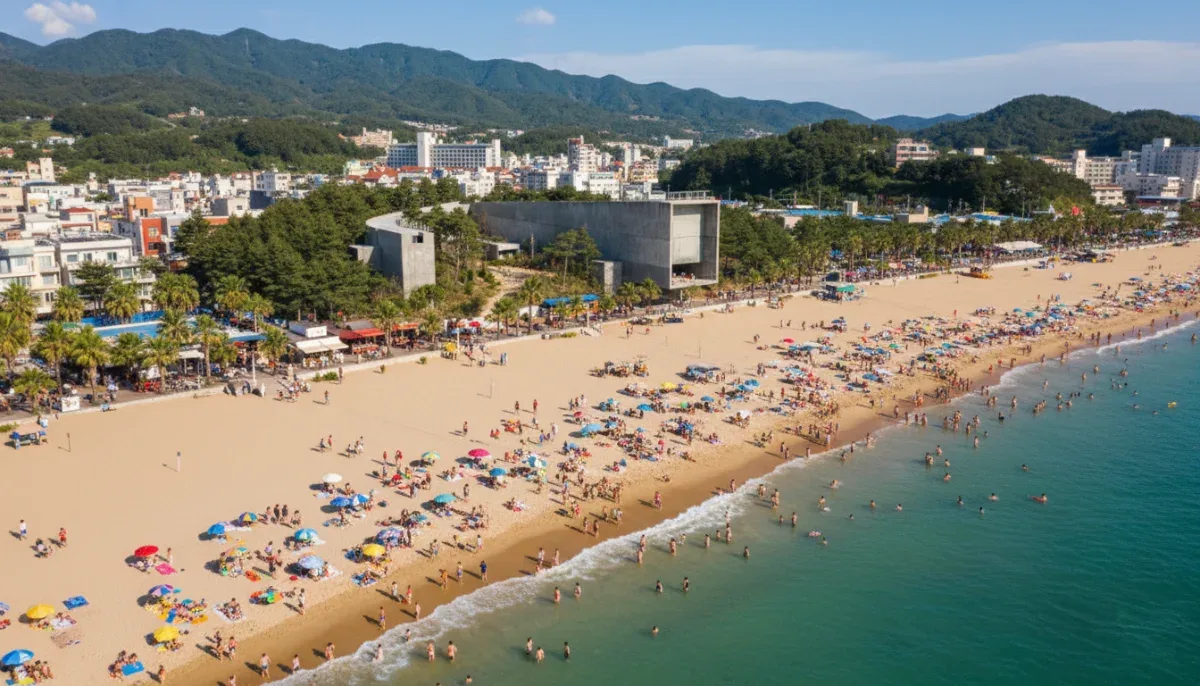
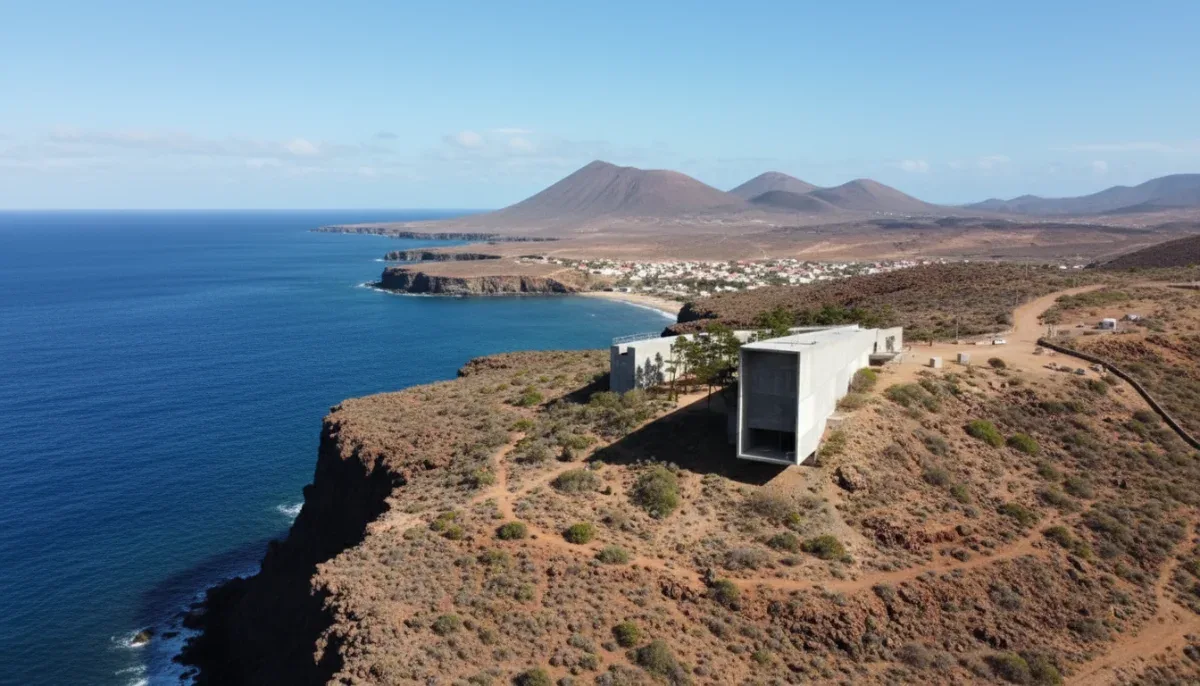
제프 쿤스의 ‘풍선 강아지’가 다양한 크기와 색상의 에디션으로 판매되어도 그 가치를 잃지 않듯, 시자의 소요헌 역시 ‘알고리즘 프로덕트’로 규정될 수 있을까? 만약 블록체인이나 인증 마크를 통해 건축가의 지적재산권이 보장된다면, 소요헌은 단순한 복사-붙여넣기를 넘어 부산, 파리, 나이로비 등 전 세계 어디에서나 주변 환경에 맞게 변주되며 세워질 수 있을 것입니다.
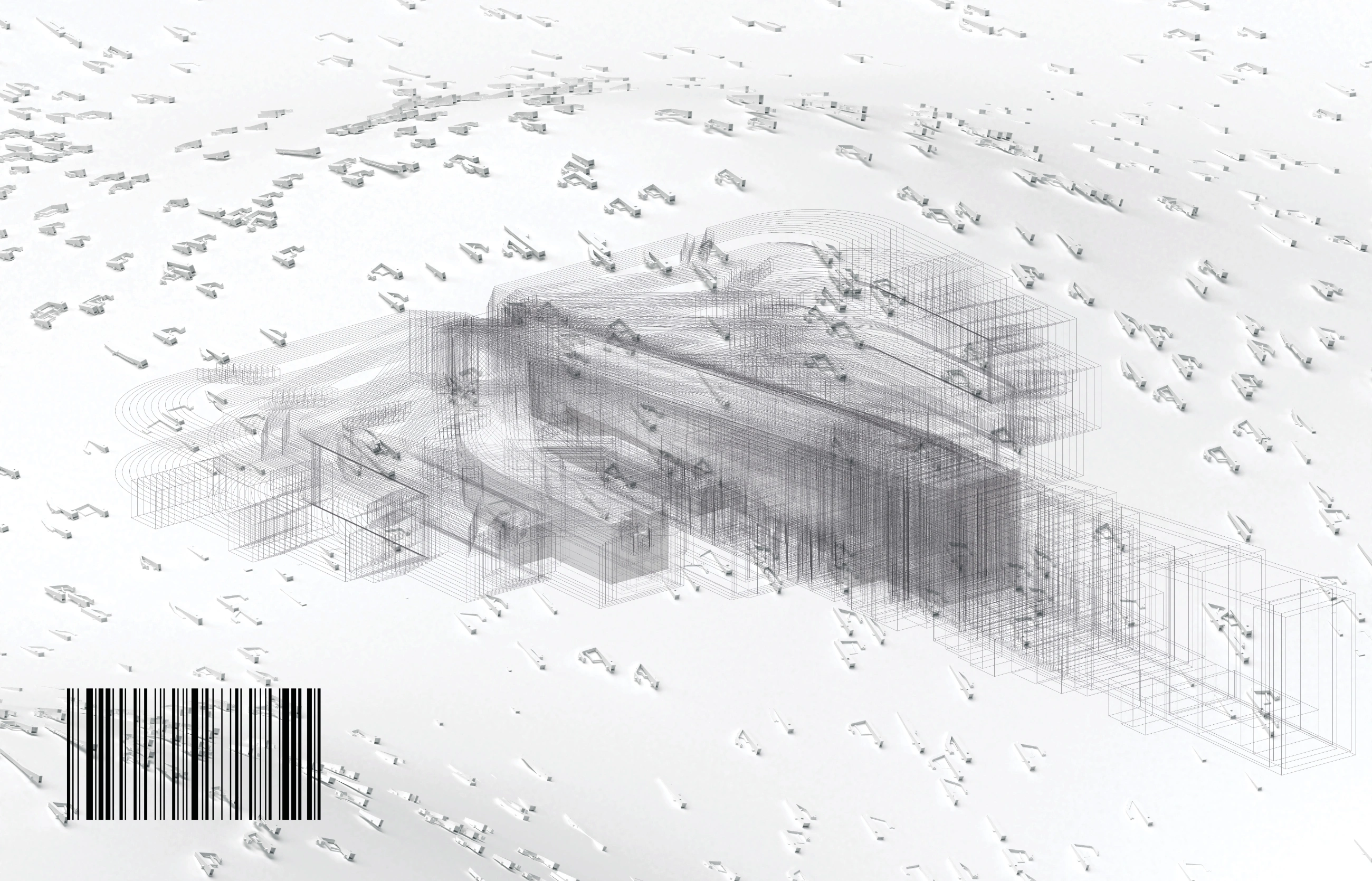
이 알고리즘 시스템 안에서 소요헌은 폭, 높이, 길이, 그리고 갈라지는 두 축의 각도를 자유롭게 조정하며 대량 맞춤 생산(Mass Customization)이 가능해집니다. 생성형 디자인, BIM, GIS 기술을 통합하여 부지 지형에의 적응부터 디테일 선택, 물량 및 공사비 산출까지 설계의 전 과정이 정보화되고 자동화됩니다. 이때 건축가는 세 단계에서 능동적으로 개입합니다. 초기 설계 원리(Product)를 정의하고, 주요 변수를 통제하며, 최종적으로 휴먼-인-더-루프(Human-in-the-loop) 방식을 통해 미적 선호를 반영하는 최적화를 수행합니다. 이를 통해 무한히 펼쳐진 가능성의 공간은 건축가의 뚜렷한 의도가 담긴 한정된 선택지로 정교하게 큐레이션 됩니다.
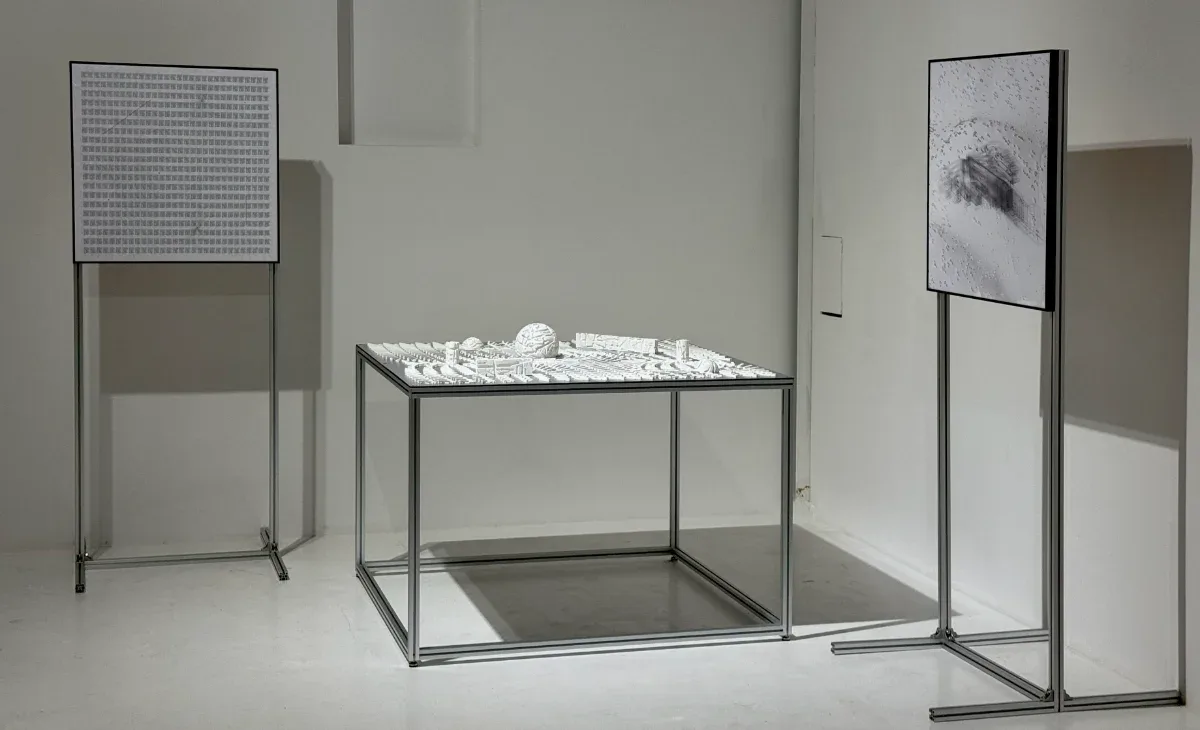
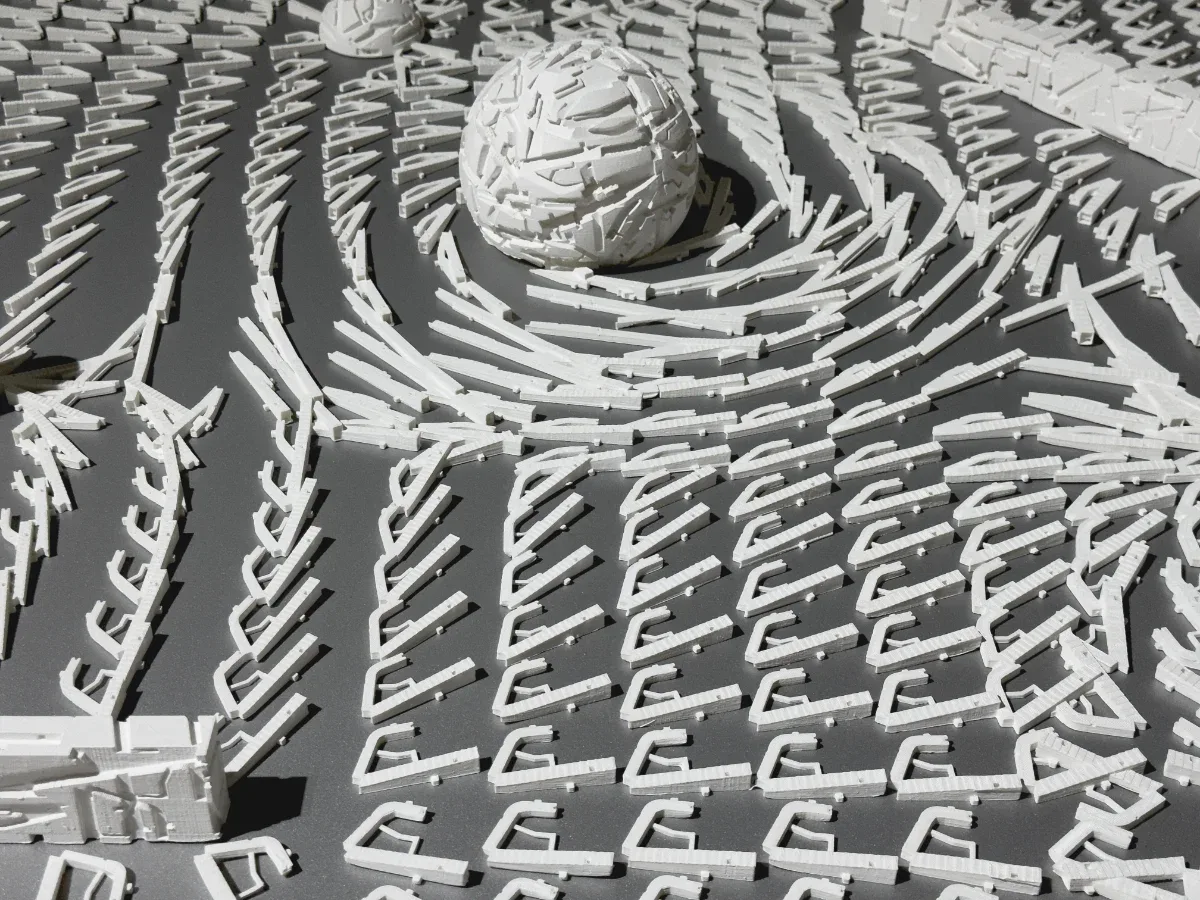
이러한 논의는 물리적 설치작 「수요와 공급의 장(Fields of Supply and Demand)」을 통해 시각화됩니다. 1.2 × 1.2m 평면에 파내어진 7개의 보이드는 훌륭한 건축의 부재에서 오는 ‘수요’를 상징하며, 20 × 30의 좌표 격자 위에 배열된 1:1,000 축척의 600개 소요헌 모델은 그에 상응하는 ‘공급’을 의미합니다. 각각의 모델은 위치 좌표(부동산 가치)와 수요 강도에 반응하여 두 축의 각도, 방향, 폭, 깊이가 모두 다르게 형태를 갖춥니다. 나아가 각 에디션에는 고유 번호와 함께 예상 공사비, 거푸집 면적, 콘크리트 물량, 연면적, 축의 각도와 치수 등의 구체적인 데이터가 부여되어, 알고리즘 프로덕트가 실제 수요와 공급의 장에서 어떻게 작동하는지를 보여주는 시뮬레이션 장치로서 기능합니다.
- 위치
- 서울, 한국
- 연도
- 2025
- 클라이언트
- 파이로-폴리틱스 리얼리즘 (서울문화재단)
- 범위
- 컴퓨테이셔널 디자인
- 상태
- Exhibited
Architecture as a Product
Digital / Exhibition · Seoul, KR · 2025
An experiment that transforms Álvaro Siza’s Soyoheon into an ‘algorithmic product’.
Commissioned for 《Pyro-Politics Realism》, this project centres on the fact that Álvaro Siza’s unrealised ‘A Gallery for Two Picassos’ was built 25 years later in Changpyeong, Korea, at quarter-scale as ‘Soyoheon’. From there it expands the architect’s design principles into an algorithmic product, posing a provocative claim: repeating great architecture is not mere replication but the diffusion of excellence.
Just as Jeff Koons’s ‘Balloon Dog’ loses none of its value when sold in editions of varying size and colour, can Siza’s Soyoheon likewise be defined as an ‘algorithmic product’? If an architect’s intellectual property were secured through blockchain or a certification mark, Soyoheon could be raised anywhere in the world — Busan, Paris, Nairobi — varied to suit its surroundings, well beyond simple copy-and-paste.
Within this algorithmic system, Soyoheon becomes mass-customisable, freely adjusting width, height, length and the angle of its two diverging axes. By integrating generative design, BIM and GIS, the entire design process — from adapting to site terrain to detail selection and the calculation of quantities and cost — is informatised and automated. The architect intervenes actively at three stages: defining the initial design principles (the Product), controlling the key variables, and finally performing a human-in-the-loop optimisation that reflects aesthetic preference. An infinite space of possibility is thus precisely curated into a limited set of choices carrying the architect’s clear intent.
This argument is visualised through the physical installation ‘Fields of Supply and Demand’. On a 1.2 × 1.2 m plane, seven carved voids symbolise the ‘demand’ arising from the absence of good architecture, while 600 Soyoheon models at 1:1,000 scale, arranged on a 20 × 30 coordinate grid, represent the corresponding ‘supply’. Each model takes a different form — in the angle, direction, width and depth of its two axes — responding to its coordinate (real-estate value) and demand intensity. Each edition is further tagged with a unique number and concrete data — estimated construction cost, formwork area, concrete volume, floor area, and axis angles and dimensions — functioning as a simulation device for how an algorithmic product operates in a real field of supply and demand.
- Location
- Seoul, KR
- Year
- 2025
- Client
- Pyro-Politics Realism (Seoul Foundation for Arts and Culture)
- Scope
- Computational Design
- Status
- Exhibited