Original Copycat Architecture
디지털 / 전시 · 서울, 한국 · 2024
AI 합성 시대의 건축적 원본성과 표절을 다루며, 복제가 그 자체로 고유한 원본이 되는 지점을 묻는 기획 전시.
프리드리히 키틀러가 말했듯 미디어는 우리의 상황을 규정합니다. 이는 AI 생성 이미지가 확산하고 건축계가 표절 분쟁으로 씨름하는 오늘날 더욱 유효한 명제입니다. 기술적, 법적 제약 속에서 완전히 새로운 창작이 거의 불가능에 가까운 현실이라면, 건축의 지적재산권은 기성 건축가들이 정한 견고한 잣대에 불과한 것일까요? 이 전시는 시스템의 취약점을 드러내는 화이트해커처럼 AI 생성 건축을 적극적으로 옹호하며, 저작권 분쟁의 밑바탕이 되는 주관적 인식의 전환을 유도하고자 합니다.
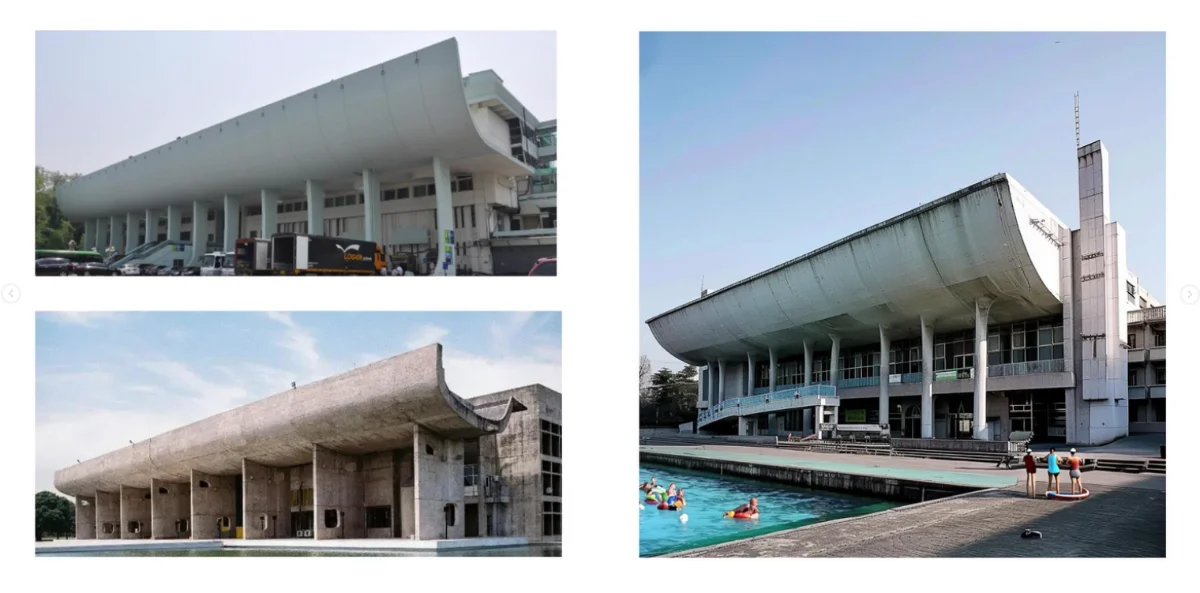
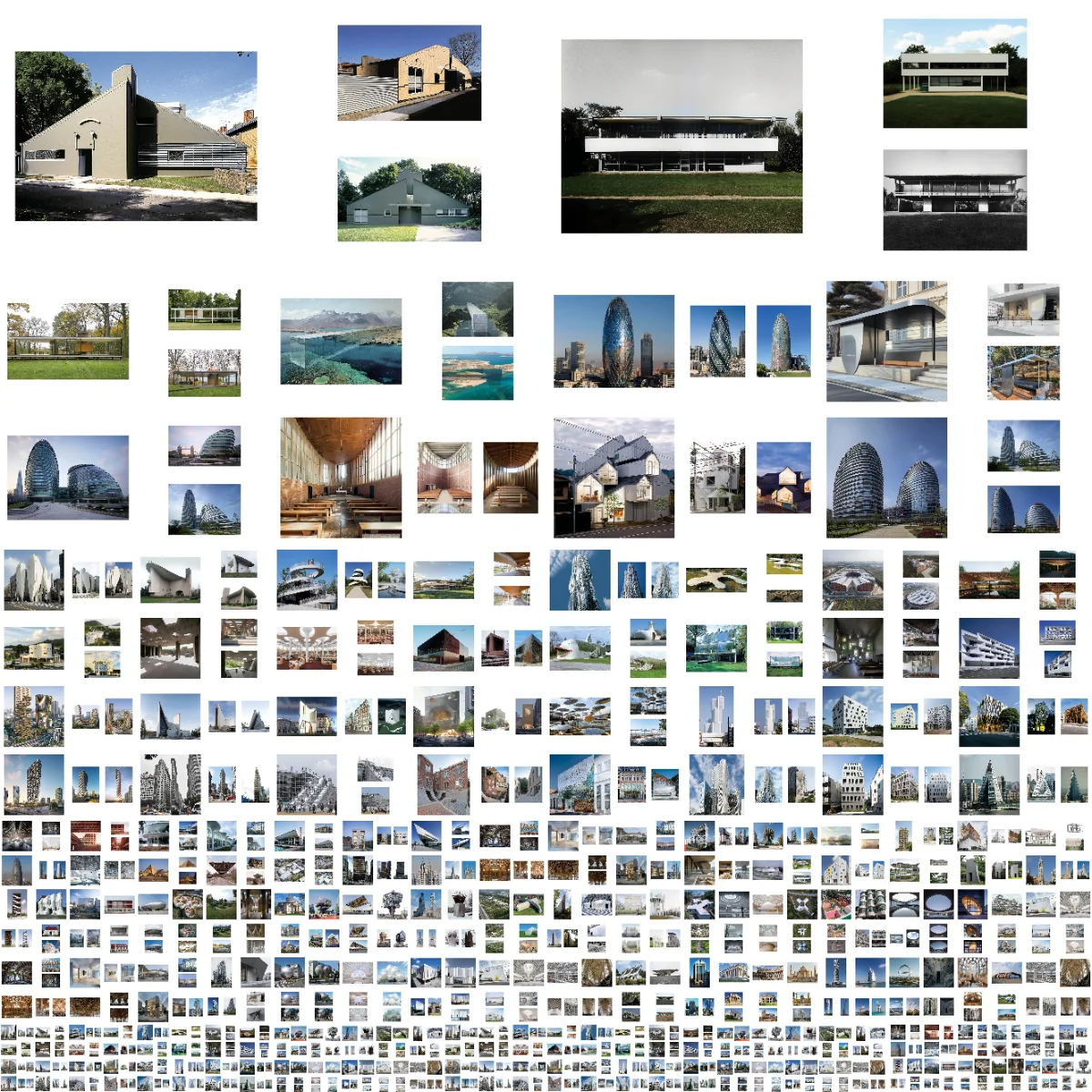
이 프로젝트는 생성형 AI와 데이터 분석 기술을 활용해 건축의 독창성에 대한 질문을 네 가지 층위의 융합적 실험으로 전개합니다. 먼저 ‘Endogamy’ 연작은 표절 의혹이 있거나 유사성이 두드러진 국내외 유명 건축물 128쌍을 선정해 생성형 AI로 합성한 새로운 이미지를 선보입니다. 예를 들어 김수근의 자유센터와 르코르뷔지에의 찬디가르 의사당을 결합한 ‘김코르뷔지에’와 같은 가상의 결과물을 통해, 원본을 주장하는 거장들의 작업 역시 온전히 독창적이지 않을 수 있음을 시사합니다.
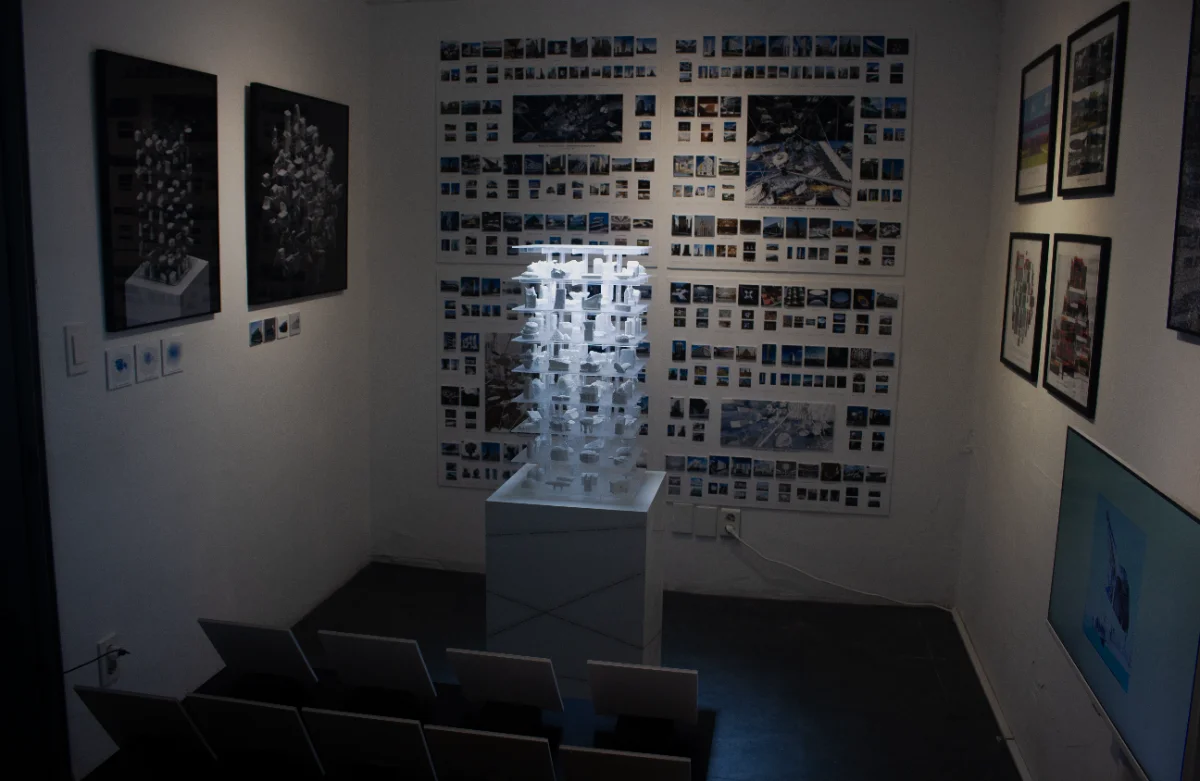
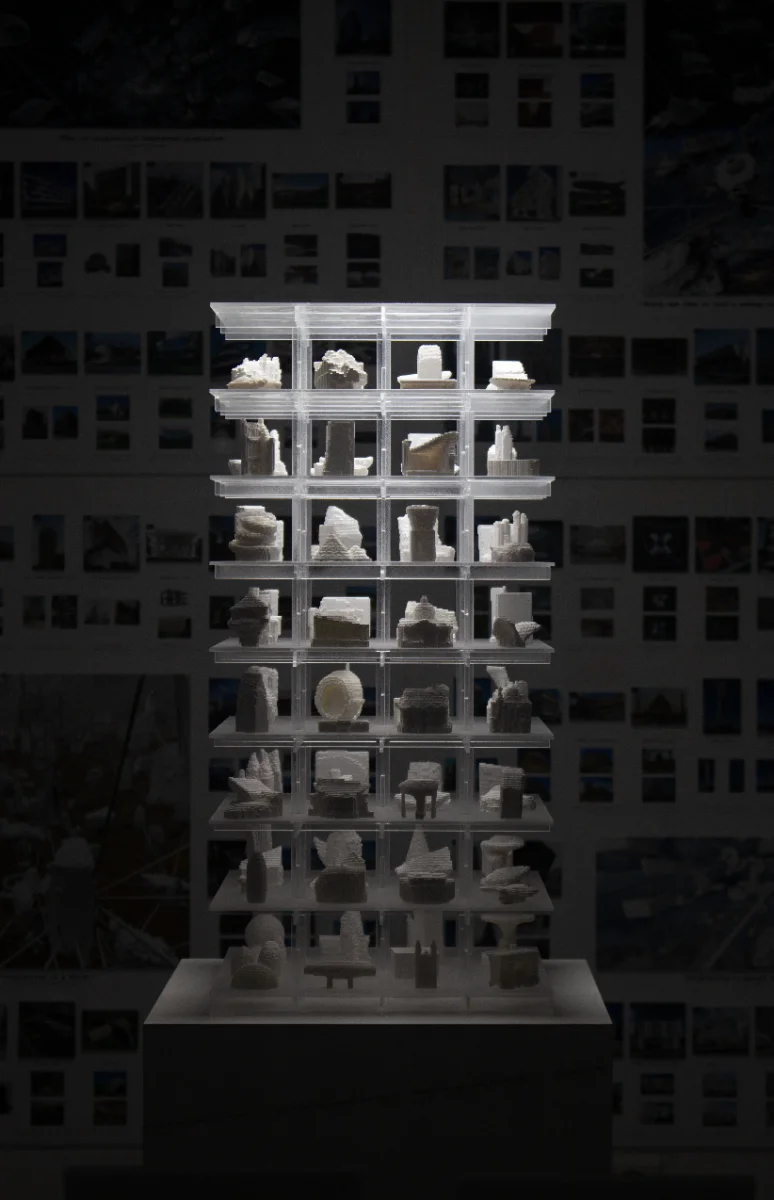
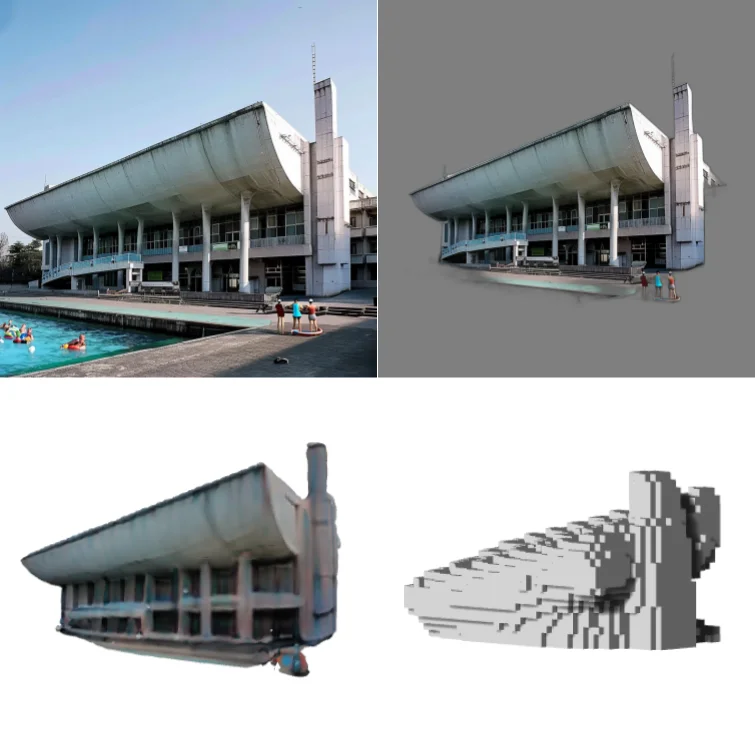
이렇게 생성된 128개의 평면 이미지는 제임스 와인스의 ‘Highrise of Homes’를 오마주한 ‘Copycat Apartment’를 통해 3차원으로 확장됩니다. SV3D 모델을 이용해 3D 메시 및 복셀(Voxel) 형태로 변환된 각 건물은 다시 형태적 유사도에 따라 4×4×8 그리드로 촘촘하게 배치됩니다. 그 결과 이웃한 건물끼리 완전히 같지도 전혀 다르지도 않은 미묘한 풍경을 연출하며, 천편일률적으로 타입화된 한국 아파트의 반복성과 대비되는 AI 생성 건축만의 새로운 다양성을 제시합니다.
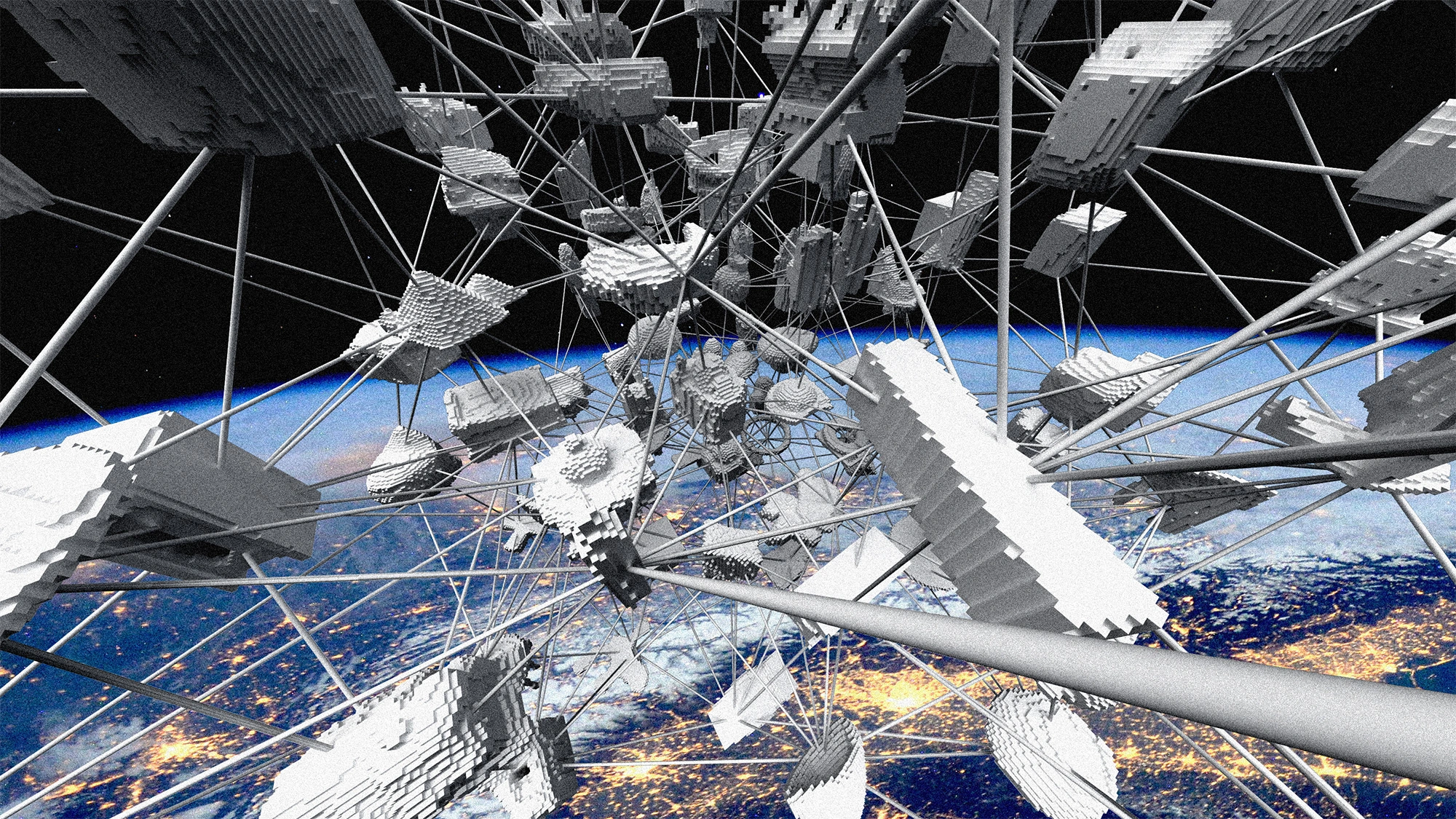
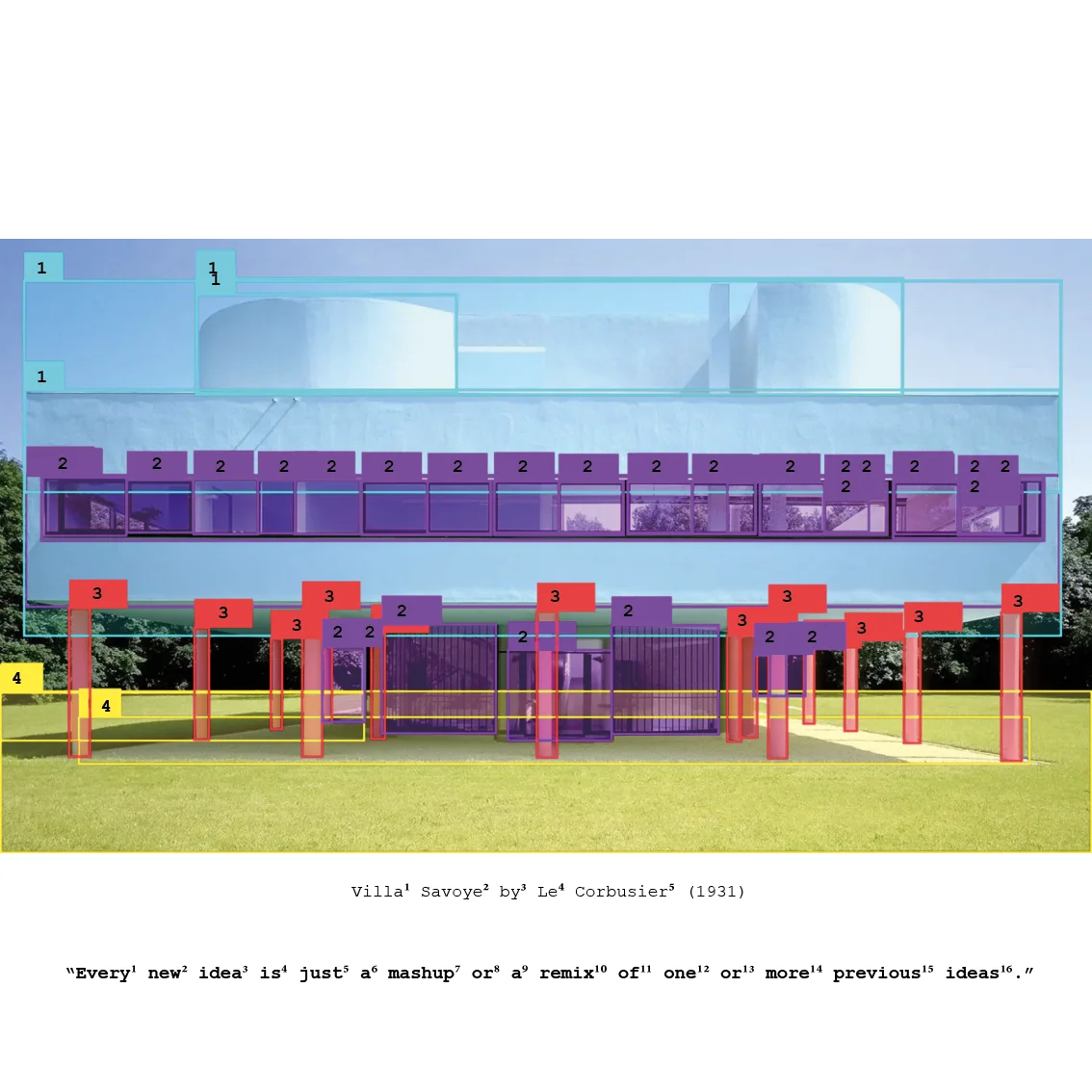
나아가 전시의 시야는 개별 건물을 넘어 전체의 데이터 네트워크로 확장됩니다. ‘Plagiarism Network’는 EfficientNet-B7 CNN 모델로 128개 이미지의 시각적 특징을 추출하고 t-SNE 알고리즘을 통해 3차원 공간에 군집화하여, 각 건축물을 가장 유사한 5개의 다른 건물과 연결합니다. 이는 모든 건축물이 디지털화되고 인터넷으로 연결된 오늘날, 세상의 어떤 건축물도 이 방대한 표절 분석망을 벗어날 수 없음을 시각적으로 드러냅니다. 마지막으로 ‘Architectural Annotation’은 YOLO-World 모델을 활용해 건축 도면과 사진 속 객체 및 키워드의 유사도를 백분율로 수치화하여 보여줍니다. 마치 학술 논문처럼 기존의 형태를 출처와 함께 명확히 ‘인용’하는 방식이 향후 건축 설계 프로세스의 새로운 패러다임이 될 수 있음을 역설합니다.
- 위치
- 서울, 한국
- 연도
- 2024
- 클라이언트
- Forking Room 2024
- 범위
- 컴퓨테이셔널 디자인
- 상태
- Exhibited
Original Copycat Architecture
Digital / Exhibition · Seoul, KR · 2024
A commissioned exhibition on architectural originality and plagiarism in the age of AI synthesis, asking where the copy itself becomes a unique original.
As Friedrich Kittler said, media define our circumstances. It is an ever more valid proposition today, as AI-generated images proliferate and the architecture world wrestles with plagiarism disputes. If, under technical and legal constraints, entirely new creation is nearly impossible, are architecture’s intellectual property rights merely a rigid yardstick set by established architects? Like a white-hat hacker exposing a system’s vulnerabilities, this exhibition actively advocates for AI-generated architecture and seeks to shift the subjective perceptions that underlie copyright disputes.
This project uses generative AI and data analytics to unfold the question of architectural originality across four layered experiments. First, the “Endogamy” series selects 128 pairs of well-known Korean and international buildings suspected of plagiarism or striking similarity, presenting new images synthesised by generative AI. Through fictional results such as “Kim Corbusier” — combining Kim Swoo-Geun’s Freedom Center with Le Corbusier’s Chandigarh Capitol — it suggests that even the masters who claim originality may not be wholly original.
These 128 plan images are then extended into three dimensions through “Copycat Apartment,” an homage to James Wines’ “Highrise of Homes.” Each building, converted into 3D meshes and voxels via the SV3D model, is densely arranged in a 4×4×8 grid by formal similarity. The result is a subtle landscape in which neighbouring buildings are neither identical nor entirely different, presenting a new diversity unique to AI-generated architecture against the uniform repetition of typified Korean apartments.
The exhibition then expands its view beyond individual buildings to the data network of the whole. “Plagiarism Network” extracts the visual features of the 128 images with the EfficientNet-B7 CNN model and clusters them in 3D space via the t-SNE algorithm, linking each building to its five most similar others. It visually reveals that in today’s digitised, internet-connected age, no building in the world escapes this vast web of plagiarism analysis. Finally, “Architectural Annotation” uses the YOLO-World model to quantify the similarity of objects and keywords in drawings and photos as percentages, arguing that clearly “citing” existing forms with their sources, much like an academic paper, could become a new paradigm for the future of architectural design.
- Location
- Seoul, KR
- Year
- 2024
- Client
- Forking Room 2024
- Scope
- Computational Design
- Status
- Exhibited