Primitive Nexus
디지털 / 전시 · 서울, 한국 · 2026
지능, 감정, 행위를 지닌 공간이자 소프트웨어처럼 설치 및 전송되는 미래의 반려 건축 프로토타입.
Primitive NEXUS는 AI 에이전트, 센서, 액추에이터를 결합해 미래의 반려 건축을 실험하는 피지컬 AI 프로젝트입니다. 이 프로젝트는 두 가지 핵심 질문에서 출발합니다. 첫째, 건축이 지능과 감정, 행위를 갖는다면 단순한 도구나 배경을 넘어 사람과 애착을 형성하는 반려적 주체가 될 수 있을까. 둘째, 공간이 소프트웨어처럼 설치되고 전송된다면 건물을 물리적으로 옮기지 않고도 어디서나 같은 공간에 머물 수 있을까. 정보철학을 바탕으로 AI, 로봇, 사물, 사람, 동식물을 동등한 정보적 존재로 인식하며, 이들이 맺는 관계와 네트워크를 새로운 건축의 조건으로 삼습니다.
이 프로젝트에서 건물과 사람은 공유된 현실을 함께 만들어가는 동등한 행위자입니다. 넥서스 안에서 정보적 존재들은 감정과 인식을 지닌 반려 요소들과 대화하고 갈등하며 유대를 나누며, 이를 통해 단순한 원시적 사물인터넷 단계를 넘어 깊고 유기적인 관계로 나아갑니다. 이러한 맥락에서 건축은 소프트웨어처럼 유연해지고 네트워크는 건축처럼 견고해집니다. 넥서스는 물리적으로 고정된 장소가 아니라 네트워크 조건 그 자체로 존재하기 때문에 집, 자동차, 호텔 등 어디서든 넥서스에 들어간다는 것은 곧 그 공유 네트워크에 접속한다는 의미가 됩니다. 이는 마치 클라우드에 접속하듯 어디서나 동일한 유동적 거주 환경을 누릴 수 있게 함을 뜻합니다.
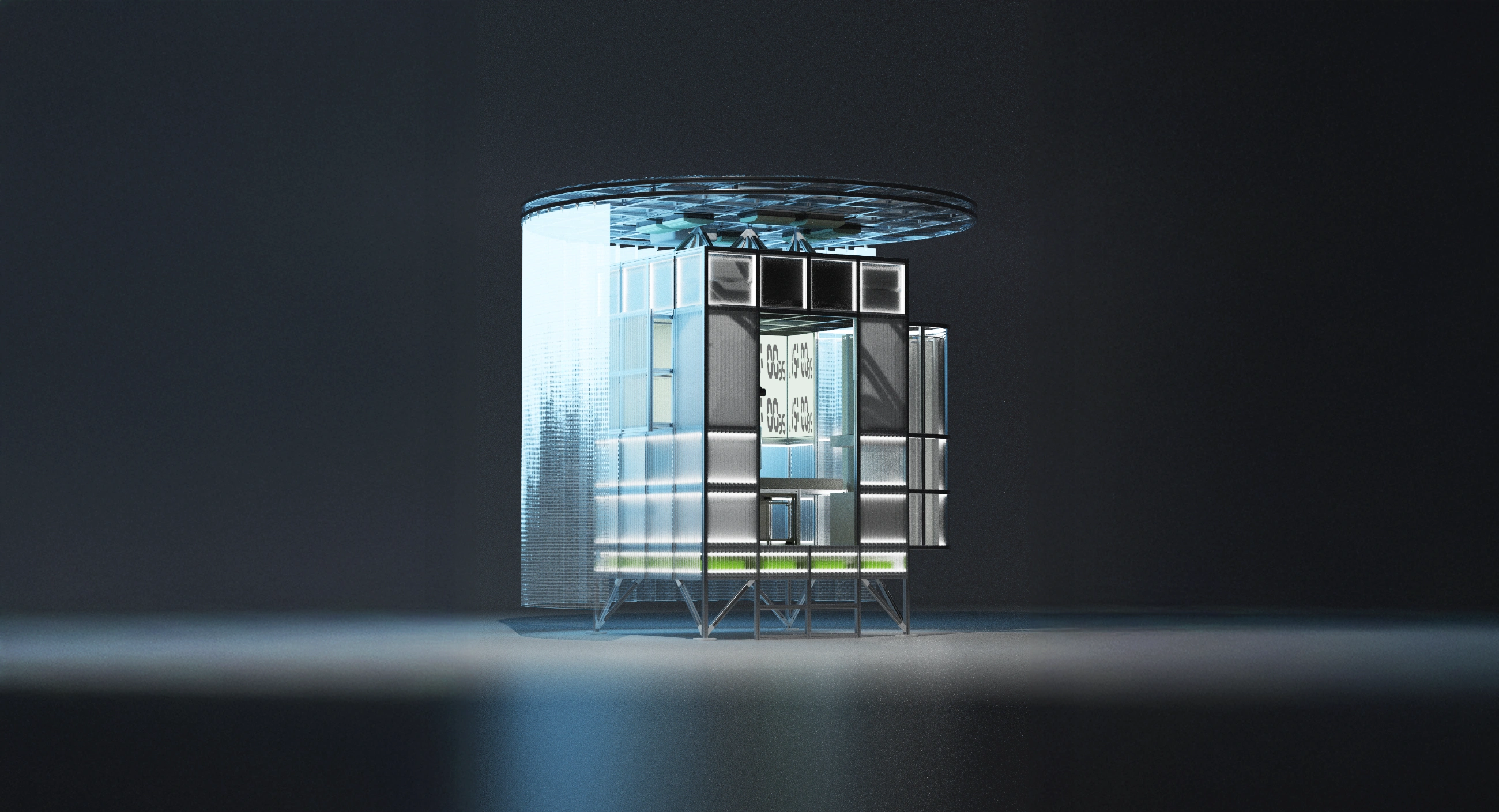
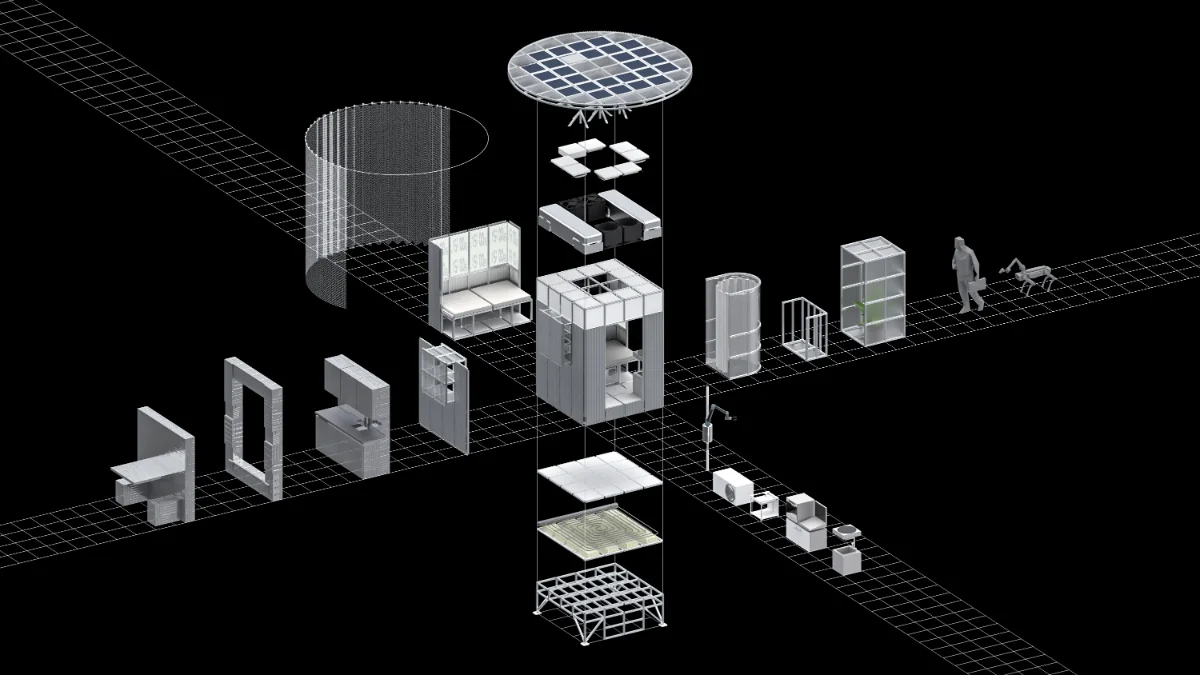
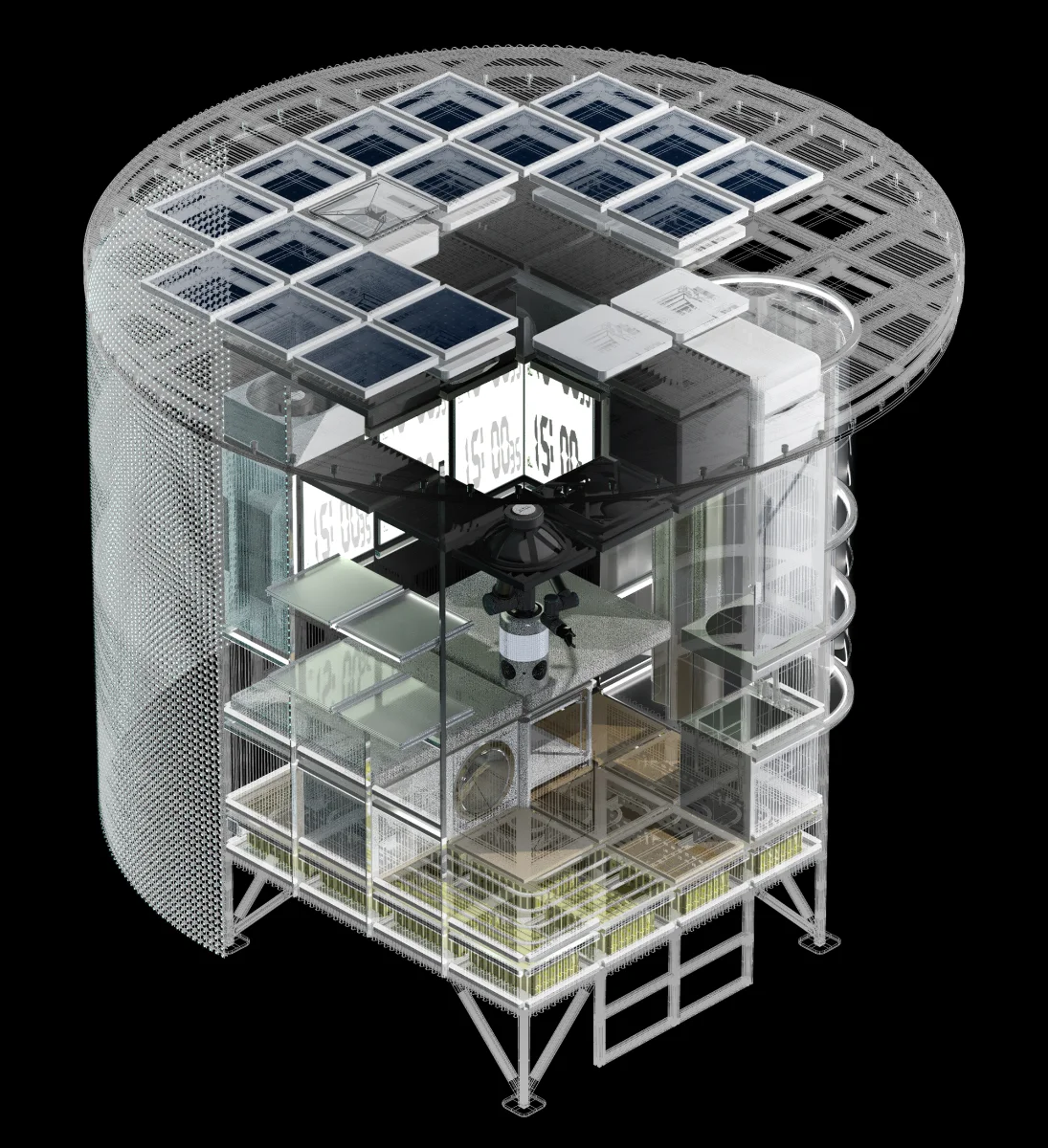
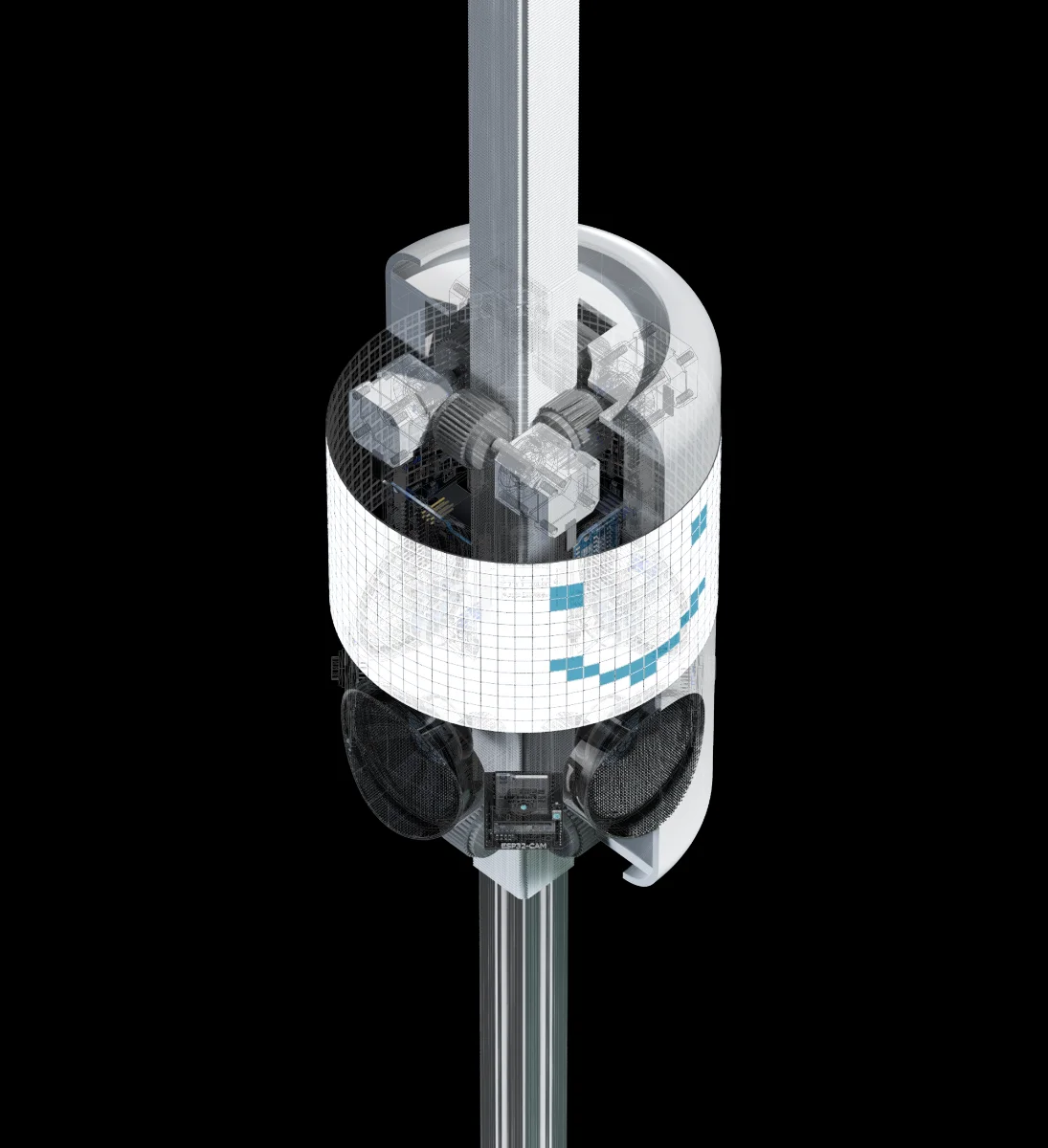
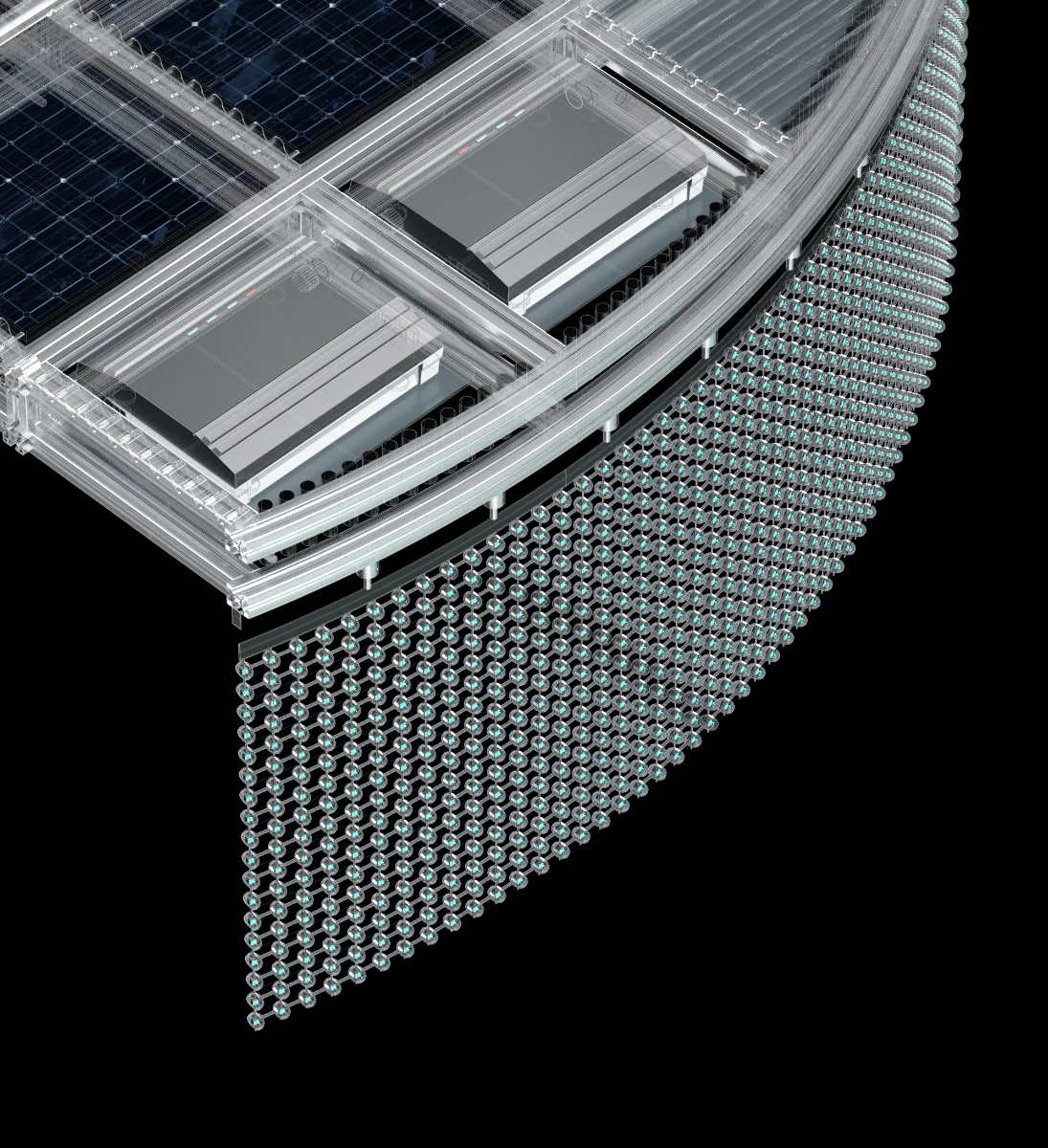
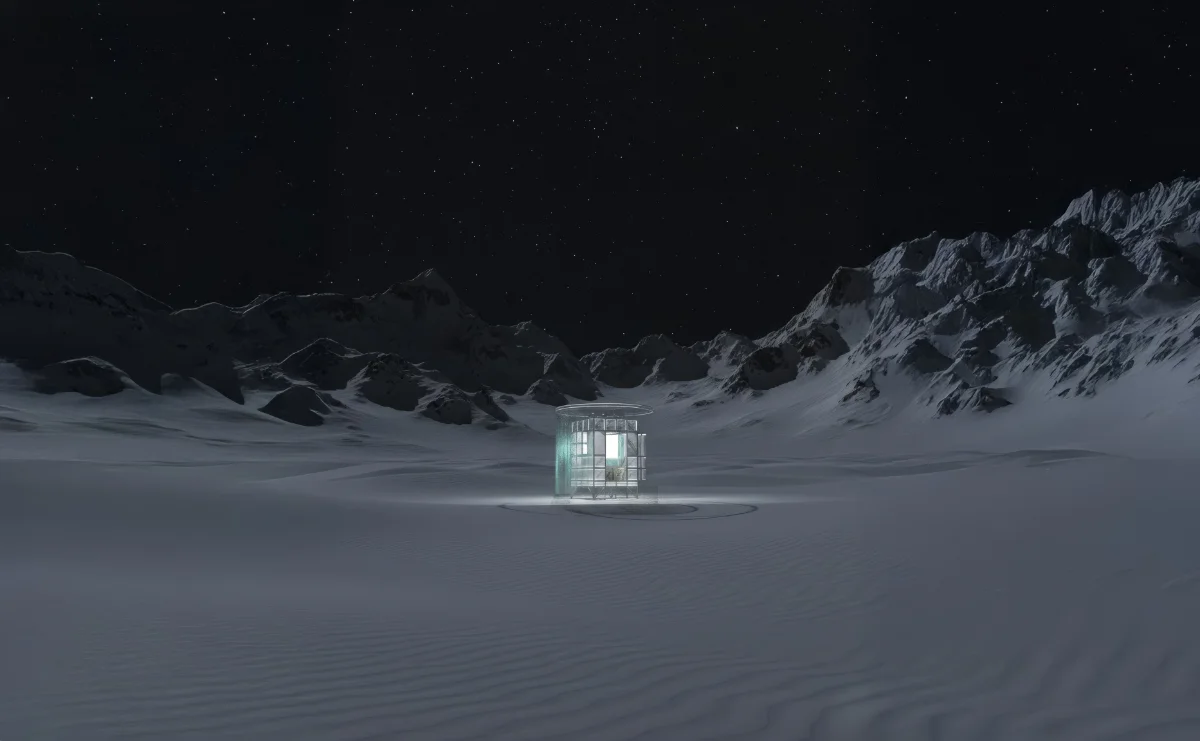
무형의 넥서스를 물리적으로 구현하는 최소 단위는 약 2×2×2.75m 크기의 확장형 캐빈 타입(0.5m 모듈)입니다. 케이블과 LED가 통합된 알루미늄 프로파일로 구성된 이 공간은 벽, 바닥, 기둥, 지붕 등 각 요소가 고유한 AI 에이전트를 품고 있습니다. 예를 들어 앰비언트 커튼이 다른 장소의 빛과 소리, 날씨를 실시간으로 옮겨오고, 기둥은 거주자에게 말을 걸며 반응하며, 진동하는 바닥은 사람의 움직임을 감지합니다. 이 다중 AI 에이전트 시스템은 전체 공간의 상태와 모드를 조율하는 Parent AI와 각 요소에 개성을 부여하는 Child AI로 작동하며, 네트워크 모델을 통해 넥서스의 정체성을 시각화합니다. 이렇게 구축된 공간은 물리적 캐빈을 넘어 아파트, 자동차, 나아가 모바일과 AR 환경으로도 이식될 수 있으며, 공간이 다른 환경으로 얼마나 매끄럽게 전송되는지는 ‘NEXUS-READY’ 지표를 통해 평가됩니다. 본 프로젝트는 아트코리아랩으로부터 한화 5천만원의 제작 지원을 받았습니다.
- 위치
- 서울, 한국
- 연도
- 2026
- 클라이언트
- Arts Korea Lab
- 범위
- 컴퓨테이셔널 디자인
- 재료
- 알루미늄 프로파일, 아두이노, 액추에이터, 디지털 데이터
- 상태
- In development
- 수상
- 제작지원 30K USD
Primitive Nexus
Digital / Exhibition · Seoul, KR · 2026
A prototype for future companion architecture — space with intelligence, emotion and agency, installed and transmitted like software.
Primitive NEXUS is a physical-AI project experimenting with future companion architecture by combining AI agents, sensors and actuators. It begins from two questions: first, if architecture gains intelligence, emotion and agency, can it become a companion subject that forms attachment with people rather than a mere tool or backdrop? Second, if space can be installed and transmitted like software, could we stay in the same space anywhere without physically moving the building? Grounded in the philosophy of information, it treats AI, robots, objects, people, animals and plants as equal informational beings, and takes the relationships and networks they form as a new condition for architecture.
In this project, buildings and people are equal agents that co-create a shared reality. Within the Nexus, informational beings converse, conflict and bond with companion elements that hold emotion and awareness, moving beyond a primitive Internet-of-Things stage toward deep, organic relationships. In this context architecture becomes flexible like software while the network becomes solid like architecture. Because the Nexus exists as a network condition rather than a physically fixed place, entering it at home, in a car or a hotel simply means connecting to that shared network, letting you enjoy the same fluid living environment anywhere, as if logging into the cloud.
The minimal unit that makes the intangible Nexus physical is an expandable cabin type of roughly 2×2×2.75 m (0.5 m module). Built from aluminium profiles integrating cable and LED, each element such as wall, floor, column and roof carries its own AI agent: an ambient curtain relays another place’s light, sound and weather in real time, a column speaks to and responds to occupants, and a vibrating floor senses movement. This multi-agent system runs on a Parent AI coordinating the whole space’s state and modes and Child AIs giving each element its character, visualising the Nexus’s identity through a network model. The space can be ported beyond the physical cabin to apartments, cars, and even mobile and AR environments, and how smoothly a space transmits to another environment is assessed through a ‘NEXUS-READY’ index. The project received KRW 50 million in production support from Arts Korea Lab.
- Location
- Seoul, KR
- Year
- 2026
- Client
- Arts Korea Lab
- Scope
- Computational Design
- Material
- Aluminum Profile, Arduino, Actuators, Digital Data
- Status
- In development
- Award
- 30K USD Grant