Seoul Panorama 2123
디지털 / 전시 · 서울, 한국 · 2023
시민의 참여와 데이터로 완성하는 산지 생태계와 미래 인프라의 공존, 서울 구릉지를 위한 100년 마스터플랜.
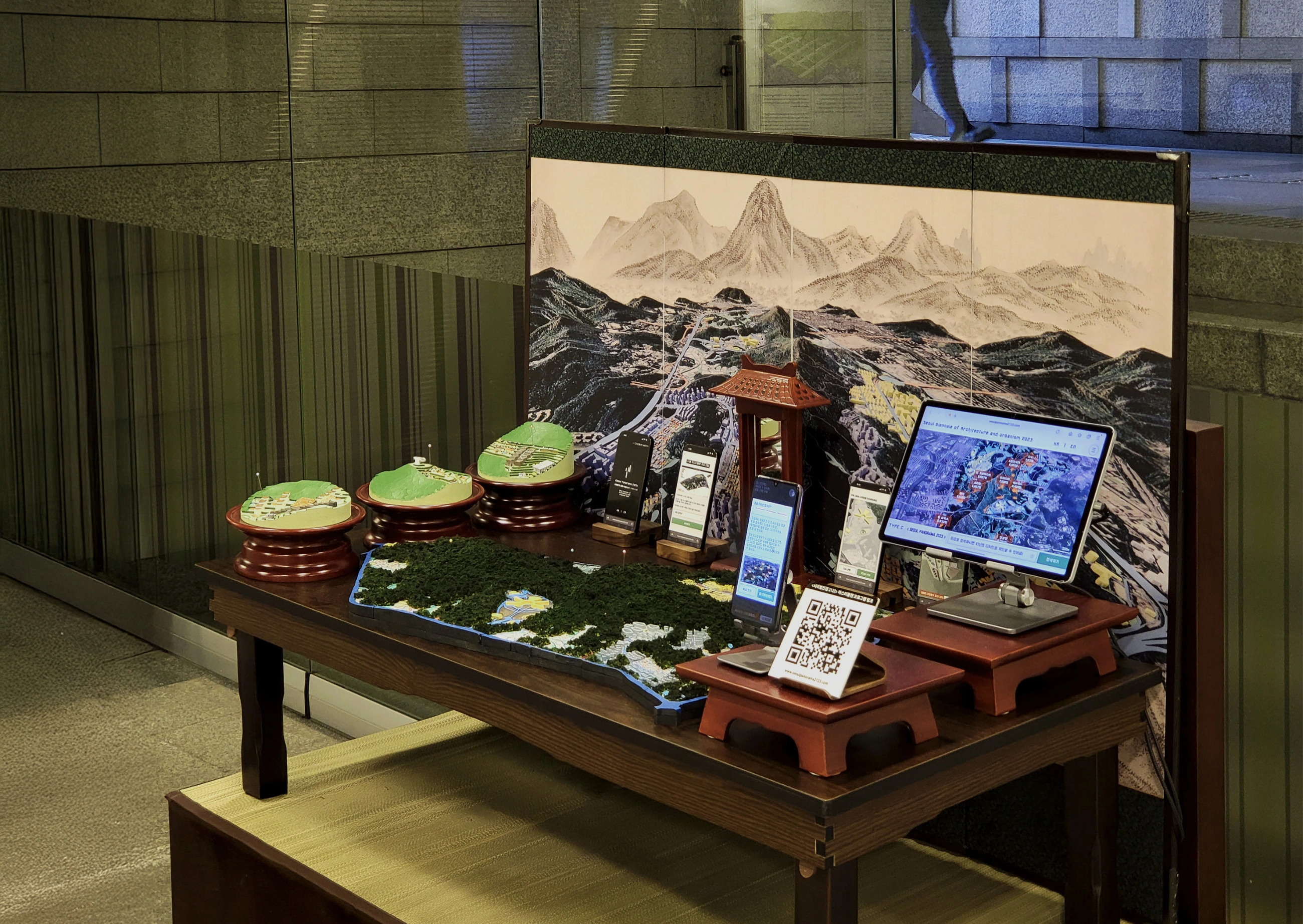
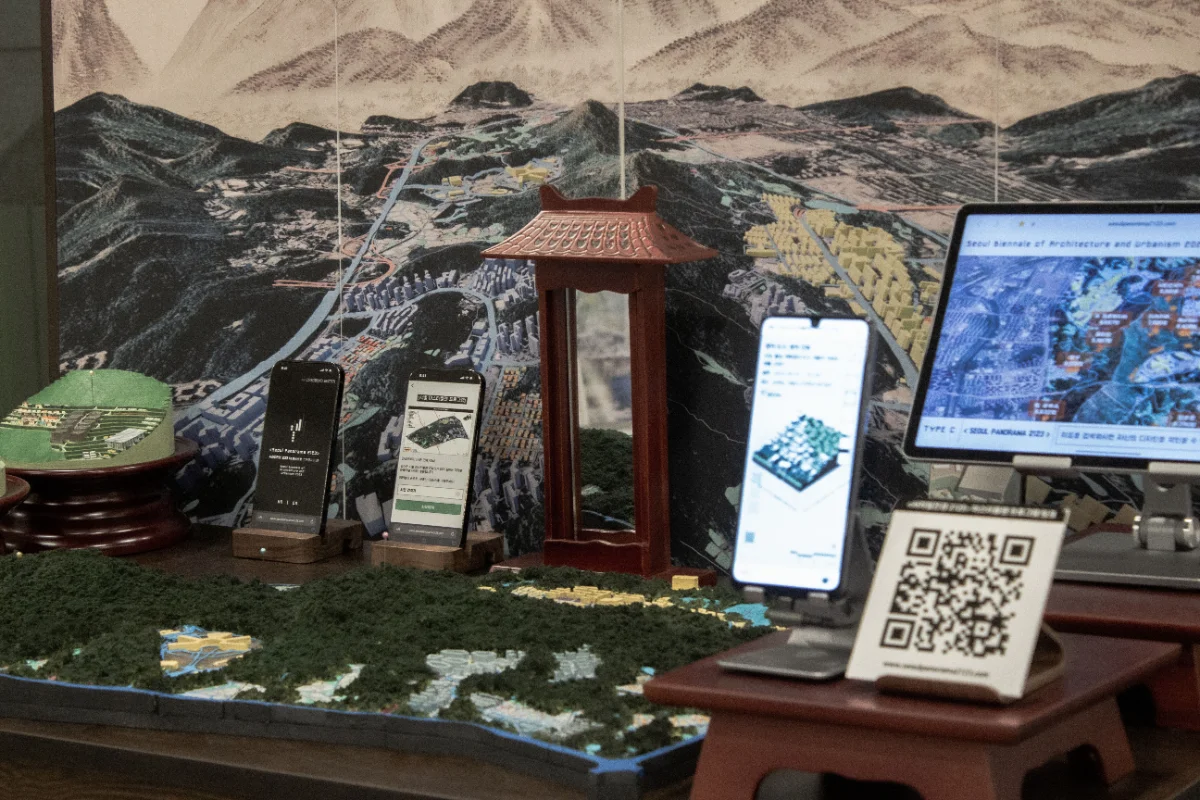
2023 서울건축비엔날레 ‘서울 100년 마스터플랜’ 전시작인 Seoul Panorama 2123은 자동화와 AI가 건축 환경을 재편하는 포스트 인류세 시대에 단절된 서울의 산과 계곡, 바람길을 하나의 녹지 네트워크로 다시 연결하며, 시민이 직접 도시의 미래를 시뮬레이션하고 계획하는 새로운 웹 기반 마스터플래닝 방법론을 제안합니다.
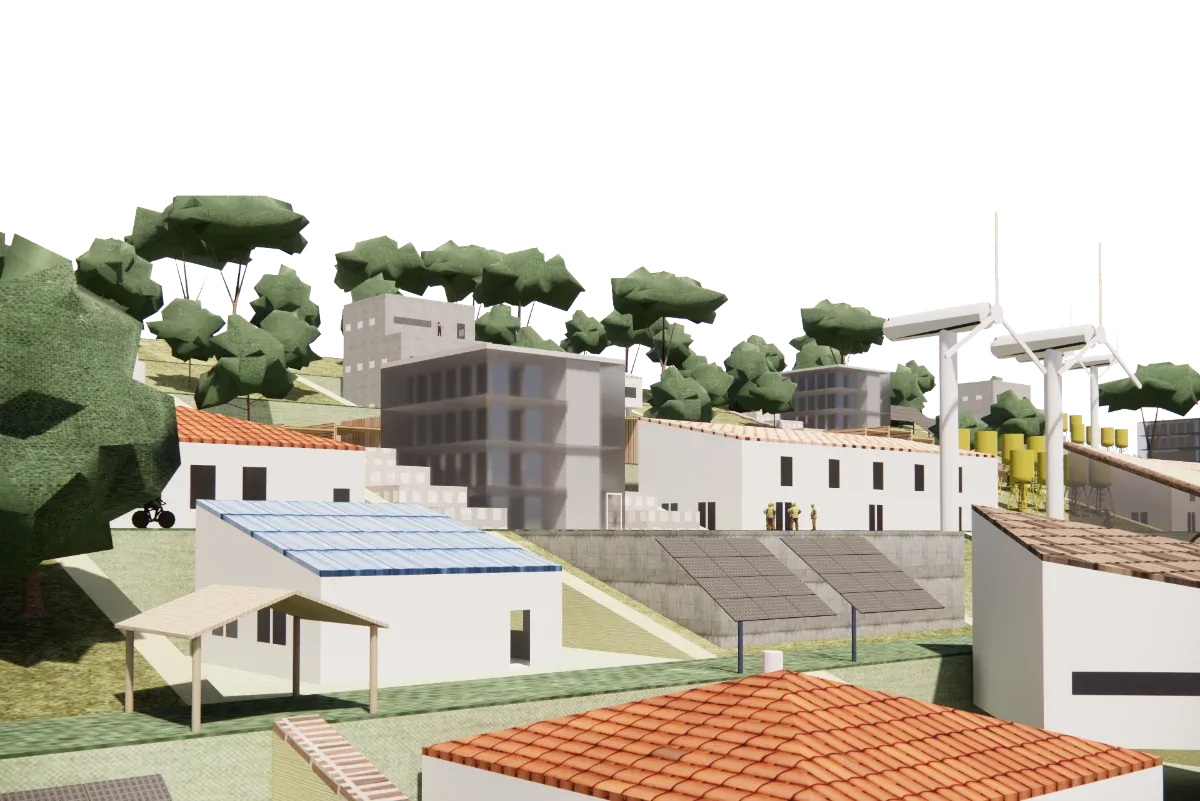
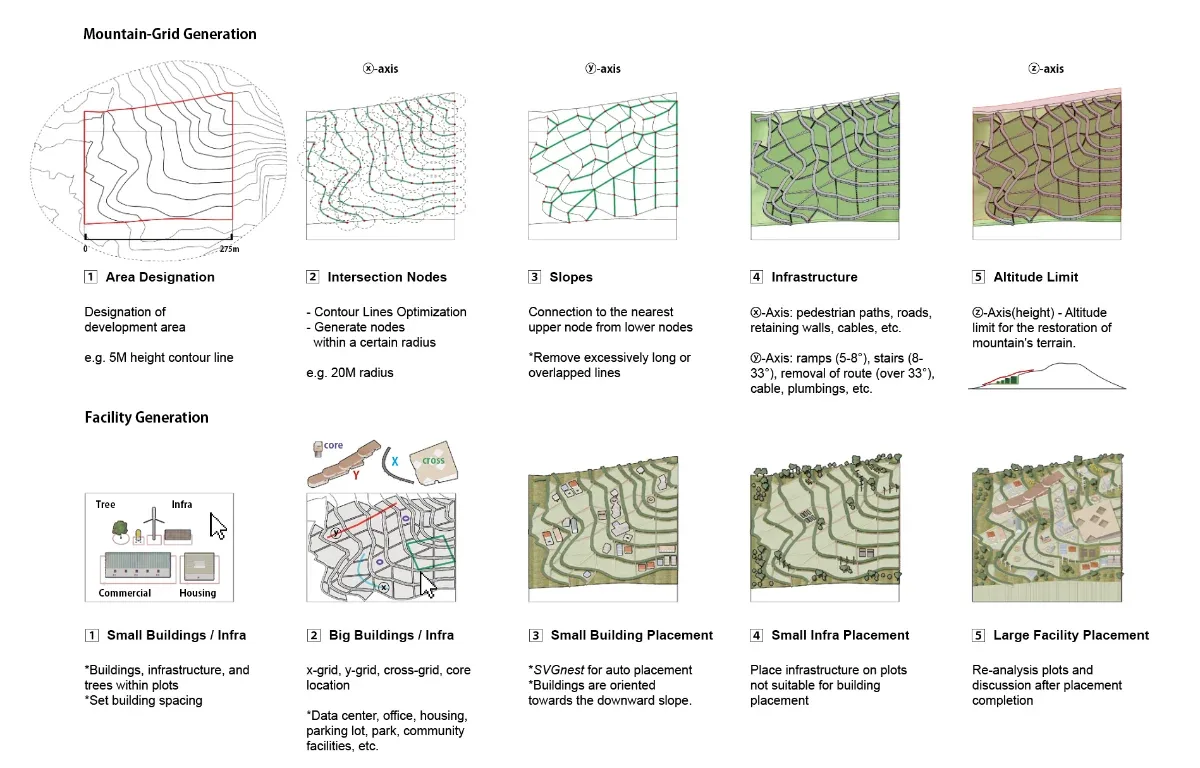
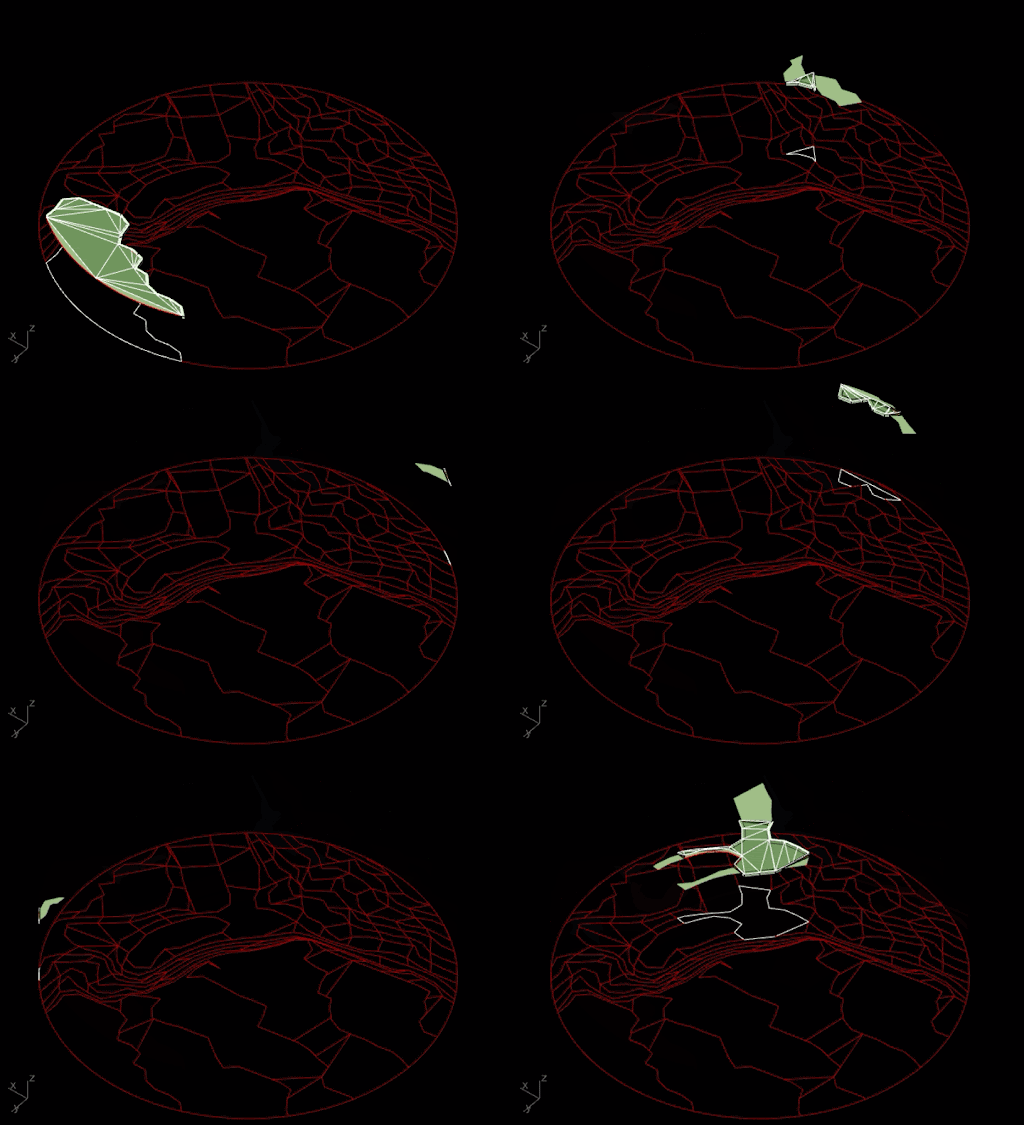
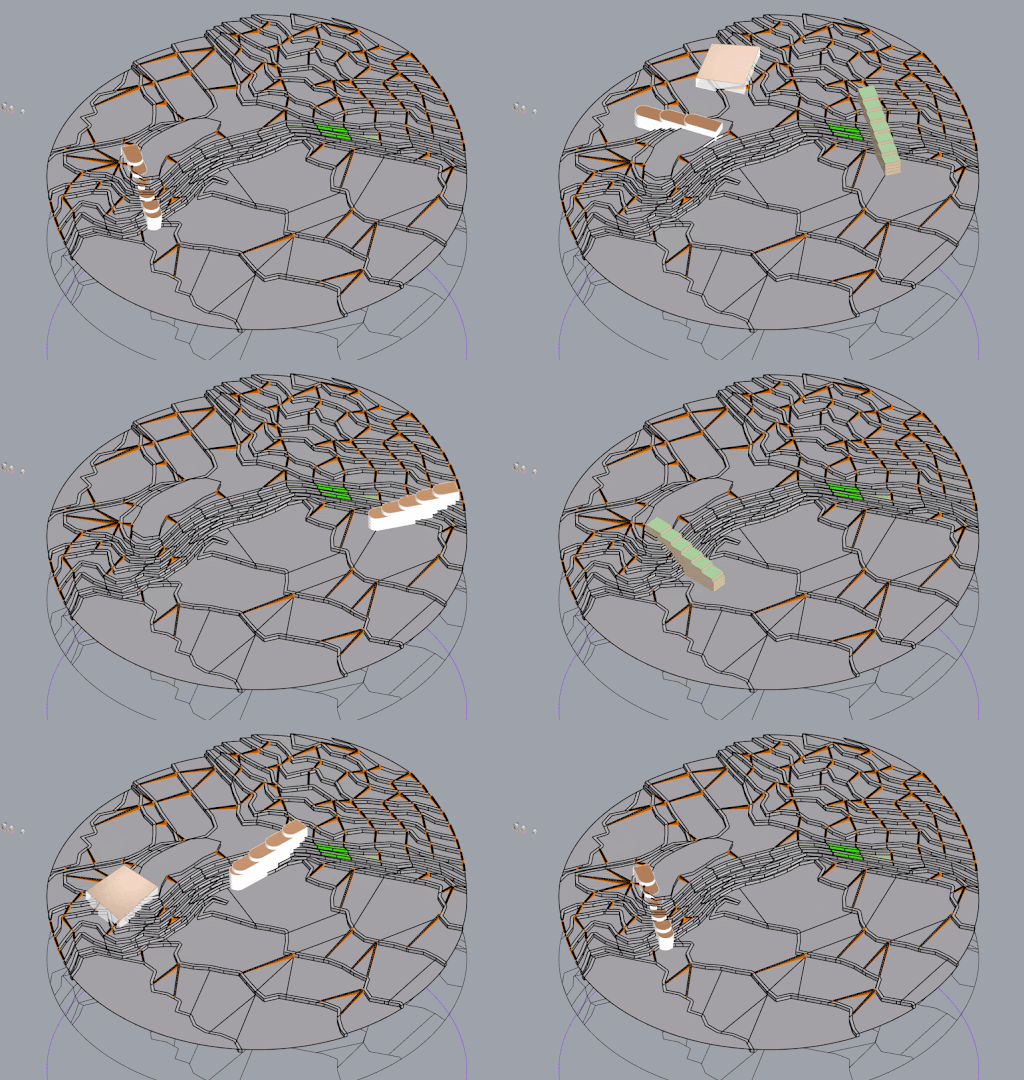
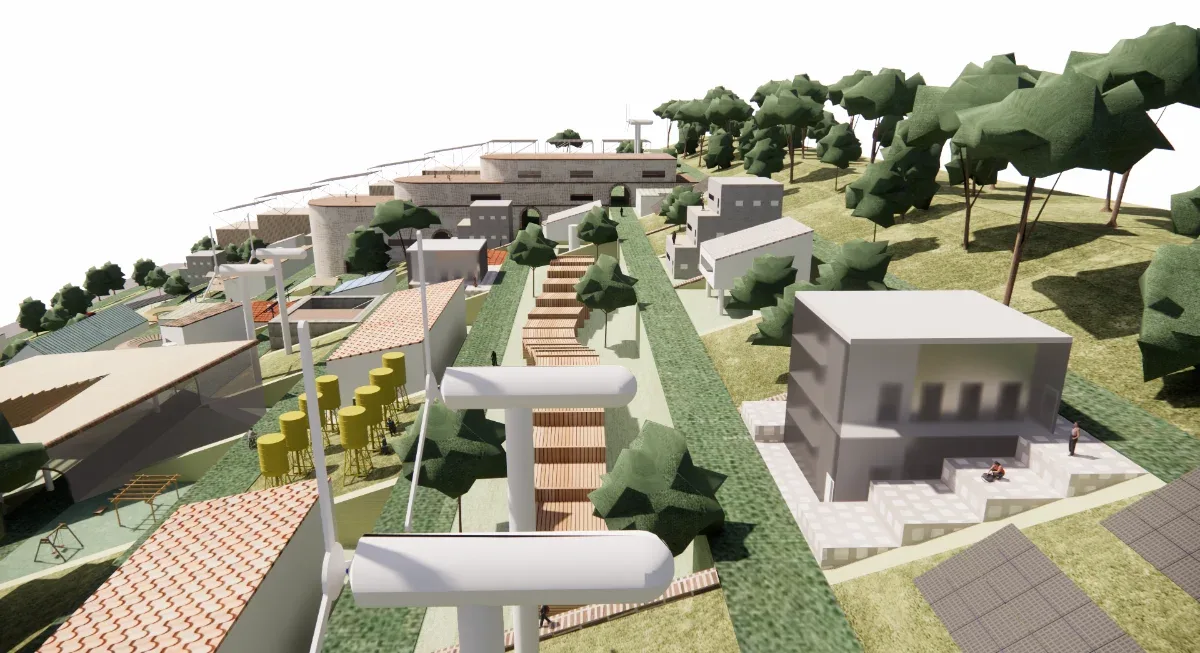
이 프로젝트는 대모산과 구룡산의 안녕을 기원하는 제의적 형식을 빌려 과거와 현재를 성찰하고, 서울의 미래를 시민의 손에 맡기는 ‘미래에서 온 메시지’입니다. 오늘날 서울의 산지는 가용 토지의 부족으로 인해 인간의 필요에 맞춰 파괴되거나, 향후 데이터센터와 같은 거대한 자동화 인프라에 의해 잠식될 위기에 처해 있습니다. 이러한 갈등을 극복하기 위해 본 프로젝트는 지형의 등고선을 인프라의 골격으로 삼는 ‘마운틴 그리드(Mountain-Grid)’ 시스템을 제안합니다. 이 시스템은 자연경관을 훼손하지 않으면서도 상층부에는 주거와 오피스, 데이터센터를 배치하고 하층부에는 주차장과 핵심 코어를 두어 구릉지 거주지를 자립적이고 생태 적응적인 공동체로 전환합니다. 특히 데이터센터와 공공시설에서 발생하는 폐열과 재생에너지를 주거와 농장 등에 재사용함으로써 자연과 기술, 인간이 조화롭게 공존하는 방식을 모색합니다.
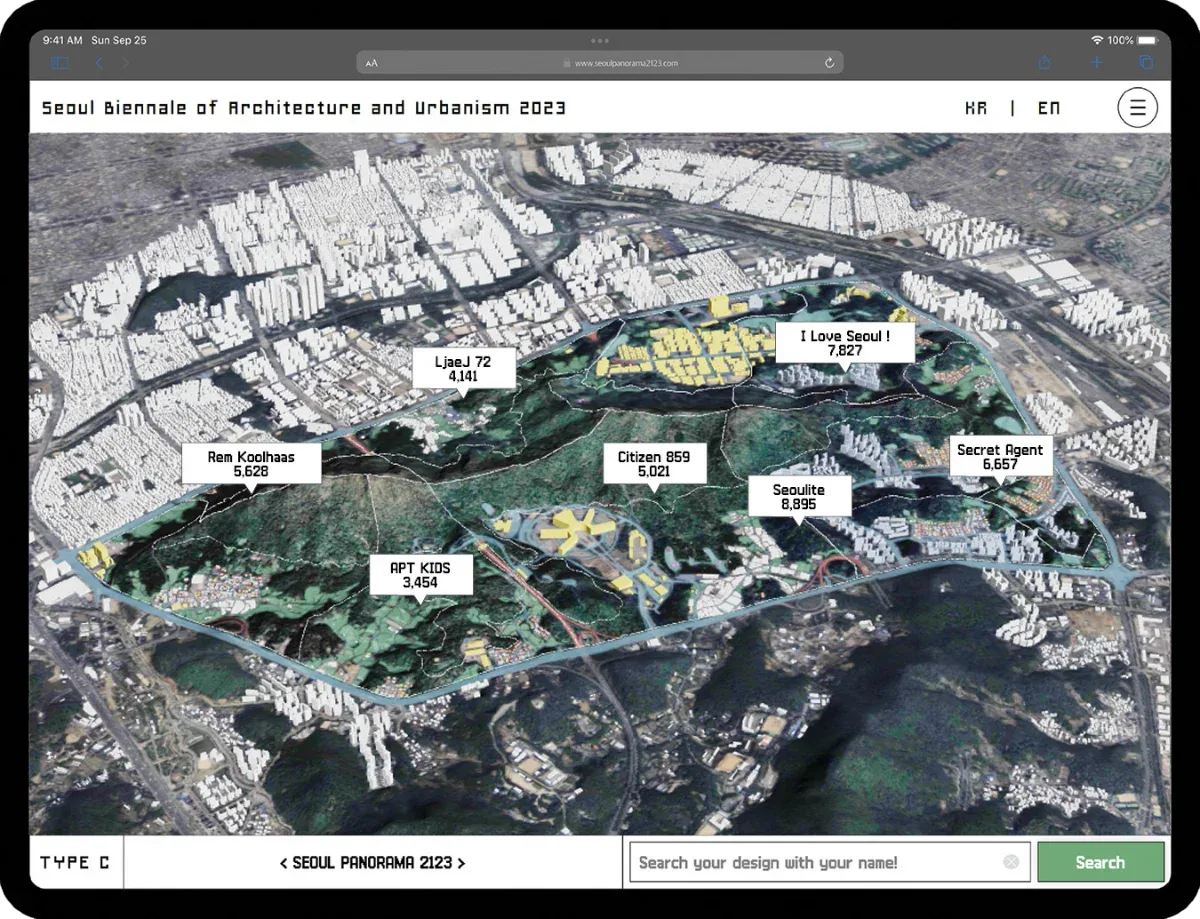
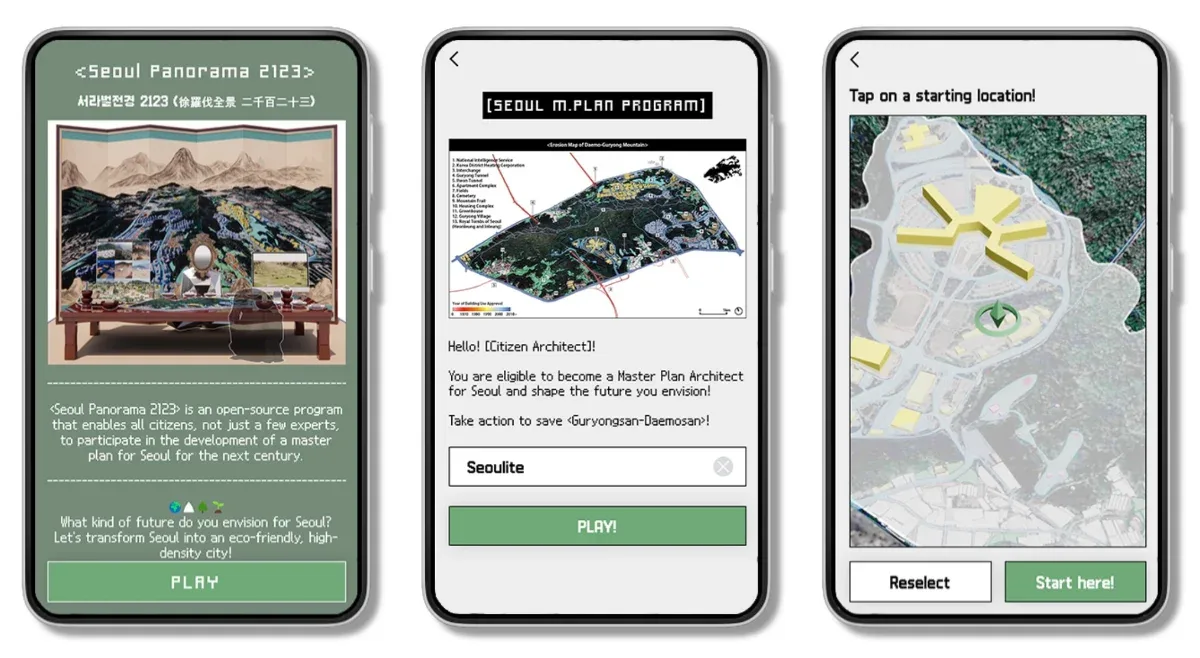
물리적인 건축 시스템과 더불어, 고정된 마스터플랜의 한계를 넘어 시민들이 직접 대지를 선택하고 디자인을 제안할 수 있는 웹 기반 참여형 마스터플래닝 플랫폼(www.seoulpanorama2123.com)을 함께 구축했습니다. 게임화된 이 플랫폼에서 시민들은 자유롭게 건물을 짓거나 철거하며 자신만의 마스터플랜을 시뮬레이션하고 공유할 수 있습니다. 제출된 수많은 디자인은 경관 친화도(Landscape Affinity), 개발 수익성(Development Profitability), 공공 기여도(Public Contribution)라는 세 가지 지표를 바탕으로 한 동적 점수 시스템을 통해 평가되며, 전문가의 의견과 사회적 요구 사이의 균형을 맞춥니다. 결과적으로 이 프로젝트는 데이터, 유희, 그리고 시민의 참여가 융합된 집단적 도시 지성을 통해 서울 구릉지의 진화하는 미래 풍경을 그려냅니다.
- 위치
- 서울, 한국
- 연도
- 2023
- 클라이언트
- Seoul Biennale 2023
- 범위
- 컴퓨테이셔널 디자인
- 상태
- Exhibited
- 수상
- 대표팀 (Type C)
Seoul Panorama 2123
Digital / Exhibition · Seoul, KR · 2023
A 100-year masterplan for Seoul’s hillsides — mountain ecology and future infrastructure coexisting, completed through citizen participation and data.
Exhibited at the 2023 Seoul Biennale of Architecture and Urbanism as part of the “Seoul 100-Year Master Plan,” Seoul Panorama 2123 reconnects Seoul’s severed mountains, valleys and wind paths into a single green network in a post-Anthropocene era where automation and AI reshape the built environment, proposing a new web-based masterplanning methodology through which citizens themselves simulate and plan the city’s future.
Borrowing a ritual form that prays for the well-being of Mt. Daemo and Mt. Guryong, this project reflects on past and present as a “message from the future” that entrusts Seoul’s future to its citizens. Today Seoul’s mountains are under threat, destroyed to meet human needs amid a shortage of available land or set to be encroached upon by vast automated infrastructure such as data centres. To overcome this conflict, the project proposes a “Mountain-Grid” system that takes the terrain’s contour lines as the framework of its infrastructure. Without harming the natural landscape, it places housing, offices and data centres on the upper levels and parking and core services below, turning hillside settlements into self-sustaining, ecologically adaptive communities. In particular, waste heat and renewable energy from data centres and public facilities are reused for housing and farms, seeking a way for nature, technology and humans to coexist in harmony.
Alongside the physical architectural system, we built a web-based participatory masterplanning platform (www.seoulpanorama2123.com) that goes beyond the limits of a fixed masterplan, letting citizens choose sites and propose designs themselves. On this gamified platform, citizens freely build or demolish buildings to simulate and share their own masterplans. The many submitted designs are evaluated through a dynamic scoring system based on three metrics — Landscape Affinity, Development Profitability and Public Contribution — balancing expert opinion with social demand. Ultimately the project draws an evolving future landscape for Seoul’s hillsides through a collective urban intelligence that fuses data, play and citizen participation.
- Location
- Seoul, KR
- Year
- 2023
- Client
- Seoul Biennale 2023
- Scope
- Computational Design
- Status
- Exhibited
- Award
- Type C Representative Team